
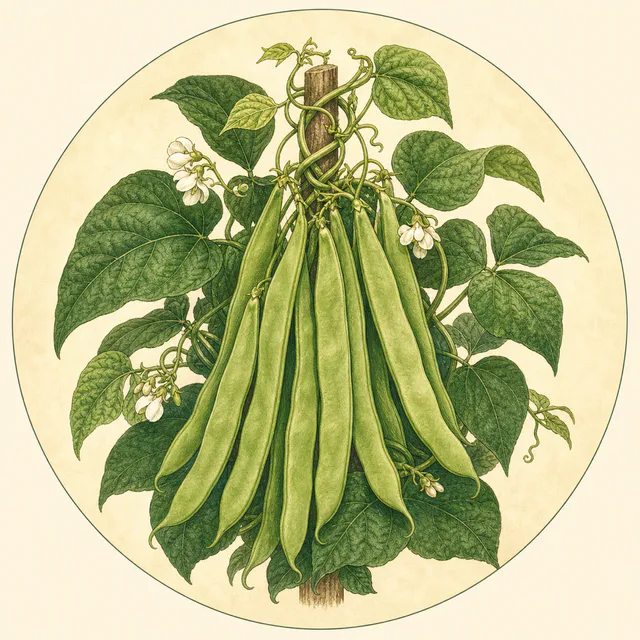
‘Algarve’ AGM
A quick climbing cultivar with straight, flat, pale to mid-green pods that are entirely stringless.
The crop growing guide
This Allotment Pro editorial draft summarises the cited RHS guide. Check the source and adjust timings for local conditions.Read the original RHS source
Your season at a glance
Indoors
Sow one bean per deep module or small pot for an early crop.
Outdoors
Direct-sow after frost once the soil is warming.
Dwarf succession
Repeat outdoor sowings for a longer harvest.
Outdoors
Harden off and plant once frost risk has passed.
Dwarf beans can begin cropping.
Climbing beans crop over a longer season when picked regularly.
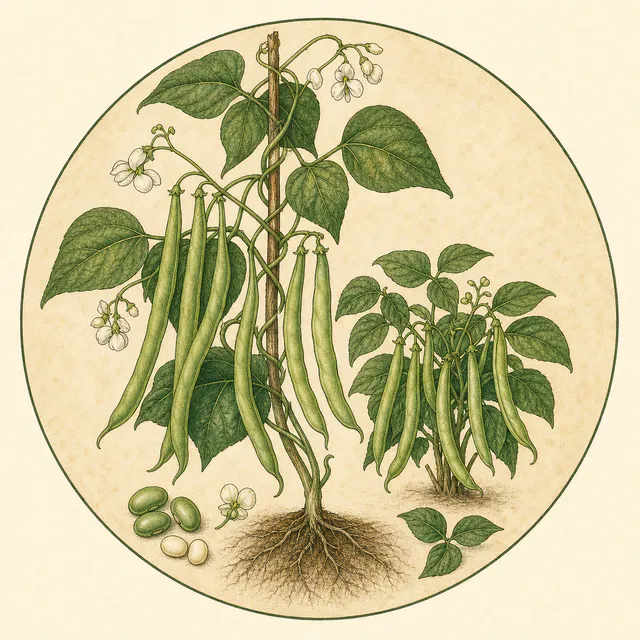
French beans, Phaseolus vulgaris, are tender annual vegetables producing edible stringless pods. Both dwarf and climbing forms are straightforward from seed, suit sunny beds and containers, and provide generous summer crops when watered well and harvested frequently.
Dwarf beans grow quickly to about 45cm (18in), need little space and may crop within eight to ten weeks, although each sowing lasts only a few weeks. Climbing beans reach roughly 2m (6ft), require tall supports and take longer to start, but produce over a longer period. The pods must be cooked before eating; raw pods and beans are harmful to people and dogs.
Choose dwarf beans for compact plots, patio pots and fast results, making repeat sowings for continuity. Choose climbing beans for a large yield from a narrow footprint and a longer mid-summer-to-autumn picking season. Pods may be green, yellow or dark purple; coloured pods are decorative and easy to see among leaves.
A quick climbing cultivar with straight, flat, pale to mid-green pods that are entirely stringless.
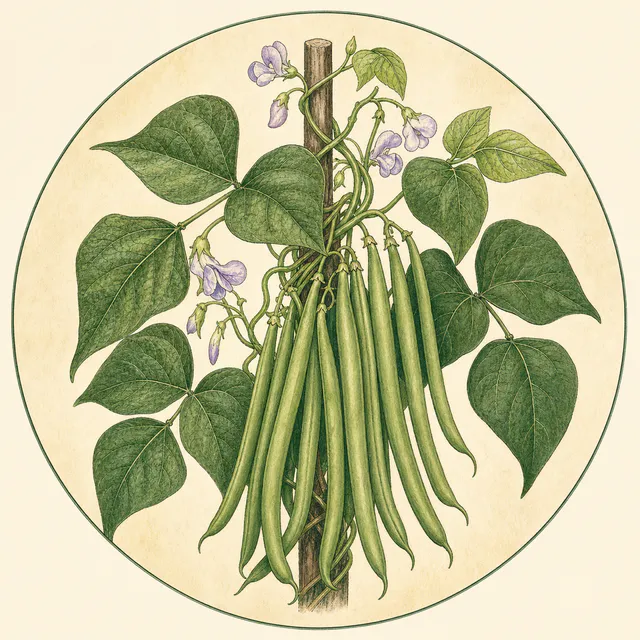
A climbing bean producing a heavy, long-season crop of tasty stringless green pods, accompanied by mauve flowers.
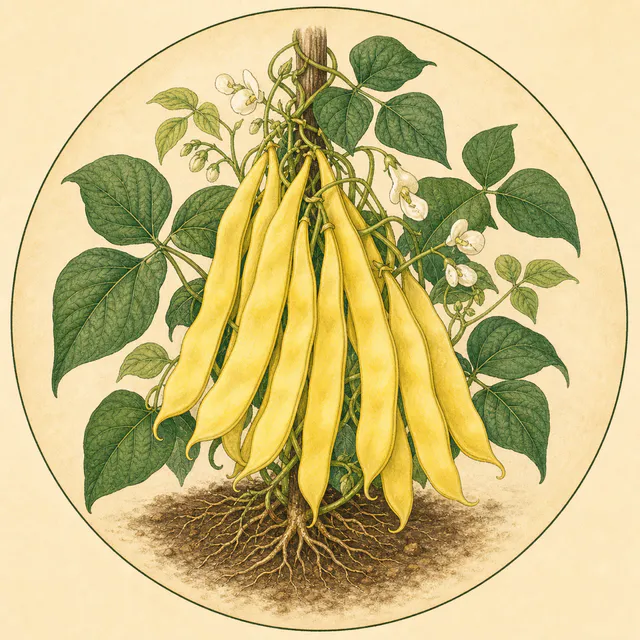
A long-cropping climber with white flowers and large, flat, eye-catching pale-yellow pods.
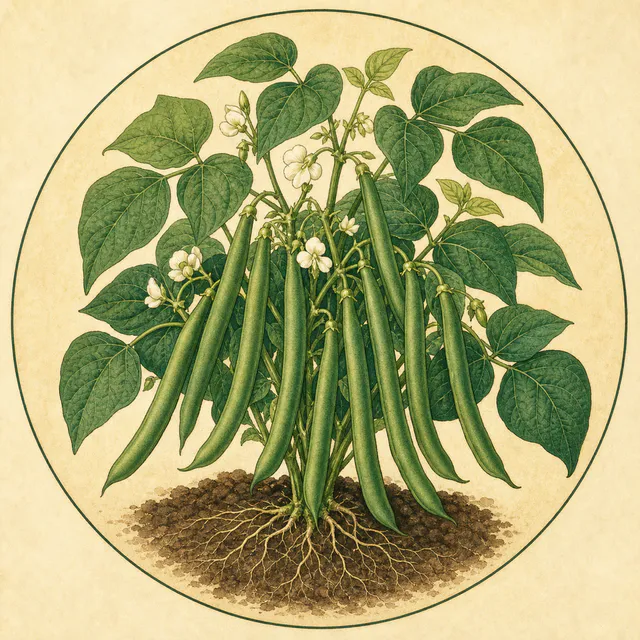
A sturdy 45cm dwarf bean yielding many long, tender, dark-green cylindrical pods with excellent flavour.
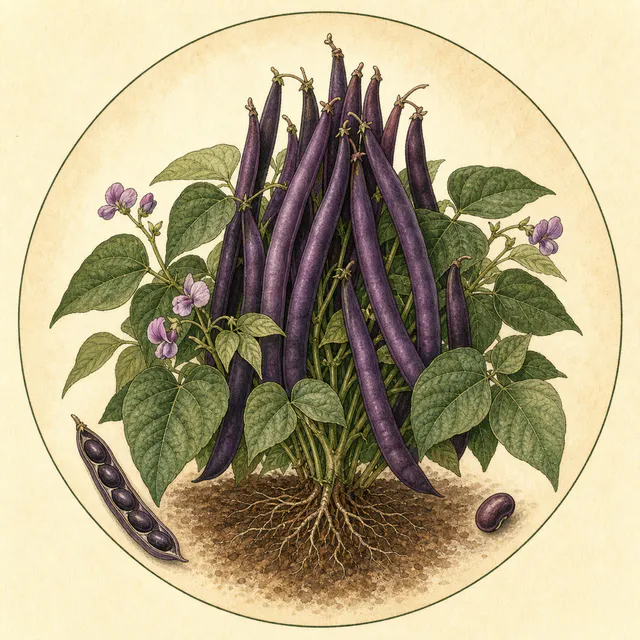
A 45cm dwarf cultivar with attractive dark-purple pods that turn green during cooking.
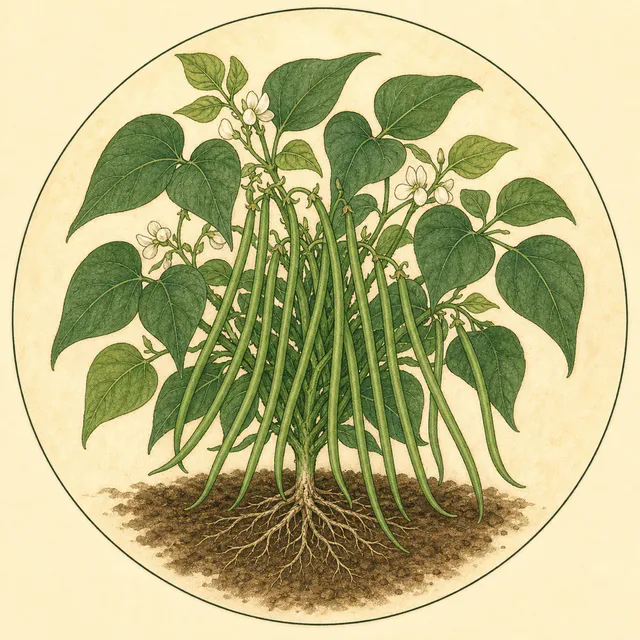
A compact fast-maturing dwarf bean bearing tender, stringless, pencil-thin green pods and needing no support.
Choose a warm sunny position with well-drained soil. Remove weeds and incorporate at least two bucketfuls of garden compost or well-rotted manure per square metre or square yard, ideally several weeks before sowing or planting so the ground settles. In a no-dig bed, mulch ahead of planting and set beans through the organic layer.
Put supports up before sowing or transplanting. For an A-frame, use two rows of 2.5m (8ft) canes spaced 15cm (6in) within each row and at least 45cm (18in) between rows, tie paired canes near their tops and add a horizontal crossbar. An X-frame crosses lower down, putting pods within easier reach but creating a less rigid structure.
For a wigwam, arrange four or five 2.5m canes in a circle, 15cm (6in) apart at the base, and tie their tops. Netting, trellis and archways are alternatives. Dwarf plants usually support one another in blocks, but short twiggy sticks can keep pods off wet soil.
Indoor sowing gives tender plants warmth and protection from molluscs. Outdoor sowing is simpler but must wait until frost has passed and soil is warm. Combining both extends the harvest.
From late April, fill deep modules or small pots with moist peat-free multipurpose compost. Sow one bean in each, 5cm (2in) deep, and place in a propagator or on a warm sunny windowsill. Maintain good light and regular water. Move plants outside after hardening off when frost risk is over, usually late May or early June.
In late May or early June, pre-warm cool ground with cloches or plastic-free fleece if useful. Sow climbing beans 5cm (2in) deep, one or two at each cane, later retaining the strongest seedling. Sow dwarf beans at the same depth and 15cm (6in) apart in blocks or double rows. Make repeat dwarf sowings through mid-summer.
For dwarf beans, use a pot 30–45cm (12–18in) wide, sow 5cm deep and 15cm apart, and let plants trail without formal support. Climbing beans need a stable container at least 75cm (30in) wide and 45cm (18in) deep with a 2.5m (8ft) cane wigwam. Sow two at each cane, then thin to one.
Wait until after the last frost. Harden plants gradually, prepare supports first, and water seedlings before and after moving them. Space all plants about 15cm (6in) apart. Arrange dwarf types in blocks or double rows so neighbouring growth holds them upright, adding twiggy sticks if pods might touch the ground.
Plant one climbing bean at the base of each cane and tie the shoot loosely until it begins twining. Use peat-free multipurpose or loam-based compost in containers, retaining the minimum pot dimensions used for direct sowing.
Water in dry weather, especially from flowering through pod formation. Containers dry rapidly and require close checking. Keep surrounding soil free of competing weeds, then mulch with garden compost or well-rotted manure after planting to conserve moisture.
Beans in fertile ground normally need no feed. Once container plants begin flowering, apply a high-potassium liquid fertiliser every fortnight. Tie loose climbing shoots back to their supports, especially on windy sites. When a climber reaches the support top, cut off further leading growth to encourage lower side-shoots, keep pods reachable and prevent top-heavy plants.
Pick pods young at 15–20cm (6–8in), while they snap cleanly and before individual beans show through the pod wall. Search beneath leaves every few days. Regular picking stimulates further flower and pod production; dwarf crops continue for several weeks, while climbers last considerably longer.
For seed saving, leave a few self-pollinated pods to mature fully at the end of the season. Pick when dry, shell them and store seed in a labelled paper bag in a cool dry place. After the final harvest, cut plants at soil level and compost the tops, leaving nitrogen-fixing roots in the ground.
French beans are usually trouble-free, but germinating seed and young plants are vulnerable. Warm, well-prepared soil speeds emergence and reduces exposure to bean seed fly. Slugs and snails attack seedlings, blackfly gathers on shoot tips, and rust may reduce vigour and yield.
White larvae damage germinating seed and roots, killing seedlings or leaving distorted blind shoots, especially in cold wet soil. Raise plants in pots, encourage rapid germination and avoid incorporating fresh organic matter immediately before sowing.
Problem sourceBlack bean aphids form dense colonies on soft shoot tips during spring and summer, weakening growth. Inspect new shoots while preserving natural predators.
Problem sourceRust produces fungal pustules on leaves and may reduce plant vigour and yield in heavy attacks. Remove affected debris after cropping and avoid crowding.
Problem sourceMolluscs can destroy seedlings and young plants in damp conditions. Indoor sowing protects the earliest growth; monitor outdoor sowings and reduce sheltered feeding sites.
Problem source