
Lettuce · Variety guide
Lactuca sativa ‘Little Gem’
Cos lettuce ‘Little Gem’ AGM
This Allotment Pro editorial draft summarises the cited RHS cultivar profile. Check the source and adjust cultivation decisions for local conditions.Read the original RHS source
Overview
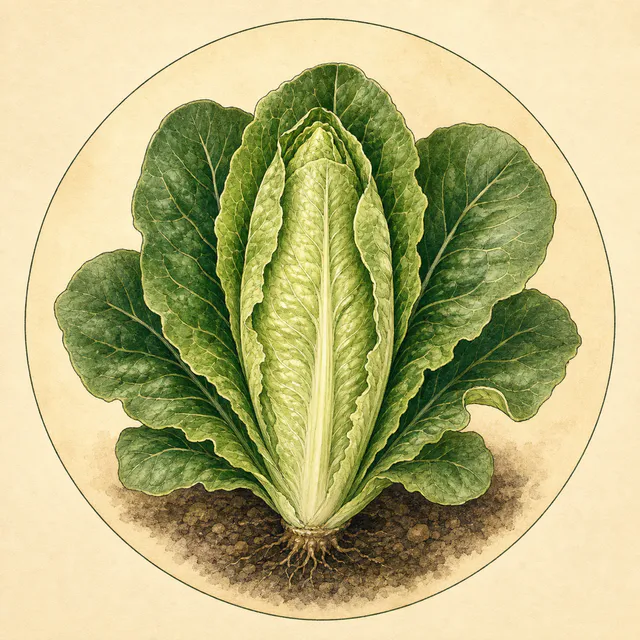
‘Little Gem’ is a dwarf cos lettuce grown as an annual vegetable. It produces small, dense heads with crisp, sweet hearts from spring into autumn, depending on sowing date. The combination of compact scale, upright cos structure and a firm centre makes it particularly useful where growing space is limited.
Its small heads are naturally portion sized and suit containers as well as beds. The cultivar is resistant to lettuce root aphid, though it still needs protection from surface-feeding pests and good disease-prevention practice. It holds the RHS Award of Garden Merit.
Size
- Ultimate height
- 0.1–0.5 metre
- Ultimate spread
- 0–0.1 metre
- Time to ultimate size
- 1 year
‘Little Gem’ is notably narrow, so it can be planted more closely than large cos or crisphead cultivars. Leave enough space for air movement and for each small dense head to form without touching its neighbours.
Growing conditions
- Suitable soils
- Chalk, clay, loam or sand
- Moisture
- Moist but well-drained
- Soil pH
- Acid, neutral or alkaline
Use fertile, moisture-retentive soil that also drains freely. The shallow root system needs steady moisture during heart formation; drought checks may toughen leaves or encourage premature bolting. Mature organic matter helps light soils retain water and improves heavier ground.
Position and hardiness
- Light
- Full sun
- Aspect
- South- or east-facing
- Exposure
- Sheltered
- Hardiness
- H2 — tolerant of low temperatures but not surviving prolonged freezing
Grow in a sunny sheltered position. Protect early and late crops with cloches or biodegradable horticultural fleece, opening or removing covers in mild weather so moisture does not remain trapped around the compact heads.
Colour and seasonal interest
Small upright heads carry smooth green outer leaves around a paler, tightly packed crisp heart. The foliage stays green from spring through autumn according to the sowing schedule. Harvest while the heart is dense and sweet, before the centre elongates; flowers and seed heads should not appear on an edible crop.
Botanical details
- Family
- Asteraceae
- Native to Great Britain and Ireland
- No
- Foliage
- Deciduous
- Habit
- Clump forming
- Name status
- Accepted
How to grow
Cultivation
Grow in full sun on moisture-retentive, well-drained soil. Sow a short row every fortnight for continuity, or raise individual plants in modules for precise spacing. Thin promptly, keep the central growing point above soil level when transplanting and control weeds without disturbing the shallow roots.
Use cloches or biodegradable fleece for early and late crops. Water at soil level in the morning, paying particular attention to containers, which dry faster than beds. Cut each head once it feels dense and crisp rather than waiting for it to lengthen or bolt.
Propagation
Propagate by seed. Sow small successive batches and avoid very hot seedbeds because high soil temperatures can inhibit lettuce germination.
Suggested locations
- Patio container
- Raised bed
- Sheltered vegetable plot
- Small-space allotment row
Pruning
No pruning is required. Remove yellow or damaged leaves and harvest the whole compact head at maturity.
Pests
‘Little Gem’ is resistant to lettuce root aphid but vulnerable to slugs and snails. Inspect beneath low leaves and use suitable barriers or biological control when needed.
Diseases
May be susceptible to grey mould and lettuce downy mildew. Avoid crowding, ventilate covers, water at soil level early in the day and remove decaying material promptly.