
Lettuce · Variety guide
Lactuca sativa ‘Lollo Rossa’
Leaf lettuce ‘Lollo Rossa’
This Allotment Pro editorial draft summarises the cited RHS cultivar profile. Check the source and adjust cultivation decisions for local conditions.Read the original RHS source
Overview
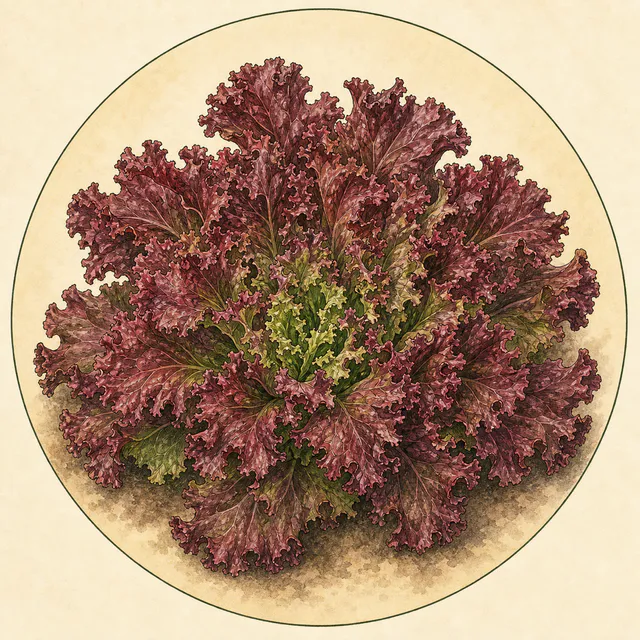
‘Lollo Rossa’ is an attractive red loose-leaf lettuce and a leafy biennial usually grown as an annual. It produces a loose head of dark-red, crinkled, heavily frilled leaves from spring to autumn according to sowing date, bringing strong colour and fine texture to salads.
Outer leaves can be picked as a cut-and-come-again crop while the central heart remains intact to produce more. Alternatively, let the rosette mature and harvest it whole. This flexible harvest style and the cultivar's heirloom character distinguish it from firm-hearted cos and iceberg lettuces.
Size
- Ultimate height
- 0.1–0.5 metre
- Ultimate spread
- 0.1–0.5 metre
- Time to ultimate size
- 1 year
The loose rosette broadens as its frilled leaves expand. Give plants enough room to retain their shape and colour, or space more closely when planning repeated young-leaf harvests.
Growing conditions
- Suitable soils
- Chalk, clay, loam or sand
- Moisture
- Moist but well-drained
- Soil pH
- Acid, neutral or alkaline
Use fertile, moisture-retentive soil that drains freely. Consistent moisture keeps repeated leaf growth tender and reduces stress, while waterlogging around the dense crinkled foliage encourages decay. Add well-rotted organic matter before sowing or planting.
Position and hardiness
- Light
- Full sun
- Aspect
- East- or south-facing
- Exposure
- Sheltered
- Hardiness
- H2 — tolerant of low temperatures but not surviving prolonged freezing
Full sun supports the richest red leaf colour. Choose a sheltered position and use cloches or biodegradable horticultural fleece for early and late crops, ventilating protection when conditions become mild.
Colour and seasonal interest
Finely crinkled leaves form a loose, open rosette. Green may remain near the base and inner growth, while the ruffled outer portions deepen to red or burgundy, especially in good light. The foliage is frillier and more divided at its edges than a cos leaf. Harvest from spring to autumn before a central flower stem forms.
Botanical details
- Family
- Asteraceae
- Native to Great Britain and Ireland
- No
- Foliage
- Deciduous
- Habit
- Clump forming
- Name status
- Accepted
How to grow
Cultivation
Grow in full sun on fertile, moisture-retentive, well-drained soil. Sow small batches in succession, thin early and keep the shallow root zone evenly moist. Protect early and late crops with cloches or biodegradable fleece and remove covers when warm or humid.
For cut-and-come-again use, pick clean outer leaves without injuring the central heart, allowing new foliage to continue developing. For whole-head use, cut the mature loose rosette at its base. Morning watering at soil level helps keep the highly crinkled foliage dry overnight.
Propagation
Propagate by seed. Sow thinly in shallow drills or modules, avoiding excessively hot seedbeds because high temperatures may inhibit germination.
Suggested locations
- Patio container
- Raised salad bed
- Vegetable plot
- Edible ornamental border
Pruning
No pruning is required. Selective outer-leaf harvesting is a cropping method rather than pruning; always leave the heart intact if regrowth is wanted.
Pests
May be susceptible to lettuce root aphid, slugs and snails. Inspect beneath the loose outer leaves and use suitable barriers or biological controls as needed.
Diseases
May be susceptible to grey mould and lettuce downy mildew. Maintain airflow, water at soil level early in the day and remove decaying leaves promptly.