
Cauliflowers · Variety guide
Brassica oleracea (Botrytis Group) ‘Candid Charm’
Cauliflower ‘Candid Charm’
This Allotment Pro editorial draft summarises the cited RHS cultivar profile. Check the source and adjust cultivation decisions for local conditions.Read the original RHS source
Overview
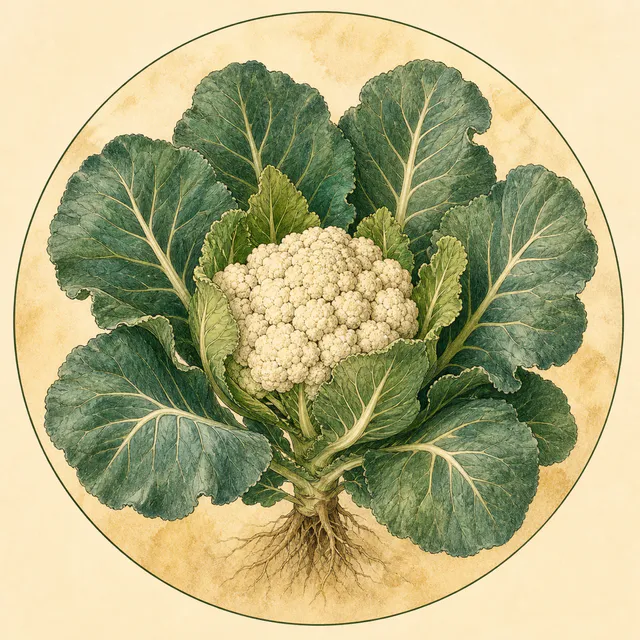
‘Candid Charm’ is a vigorous, quick-maturing annual cauliflower especially suited to close spacing. Large, rounded blue-green leaves surround a central head of densely packed cream flower buds. Its speed and compact planting pattern make it useful for summer cropping, mini heads, containers and smaller plots.
Size
- Ultimate height
- 0.1–0.5 metres
- Ultimate spread
- 0.1–0.5 metres
- Time to ultimate size
- 1 year
Plants remain compact enough for close spacing while developing a substantial central curd.
Growing conditions
- Suitable soils
- Chalk, clay, loam and sand
- Moisture
- Moist but well-drained
- Soil pH
- Alkaline or neutral
Fertile, firm soil and a steady supply of water help prevent checks to its rapid growth.
Position and hardiness
- Light
- Full sun
- Aspect
- South- or west-facing
- Exposure
- Sheltered
- Hardiness
- H3 — hardy in coastal and relatively mild UK locations
Choose a sunny, sheltered position for even growth and protect early plants from cold weather.
Colour and seasonal interest
No seasonal colours are assigned. The edible feature is a dense cream-coloured head enclosed by broad, rounded blue-green foliage.
Botanical details
- Family
- Brassicaceae
- Native to Great Britain and Ireland
- No
- Foliage
- Deciduous
- Habit
- Clump-forming
- Name status
- Accepted
- Breeder
- Michael John Day
How to grow
Cultivation
Grow in fertile soil in full sun and maintain a steady water supply. Space closely where smaller heads are wanted, or allow more room for larger curds. The compact habit also suits containers with sufficient depth, fertility and consistent watering.
Propagation
Propagate by seed, sown outdoors or started indoors.
Pruning
No pruning is required.
Pests
Plants may be damaged by birds and caterpillars. Net young crops securely and inspect leaf undersides regularly.
Diseases
Plants may be susceptible to club root. Use clean transplants, avoid moving contaminated soil and rotate brassicas where possible.