
Endive · Variety guide
Cichorium endivia ‘Wallone’
Endive ‘Wallone’
This Allotment Pro editorial draft summarises the cited RHS cultivar profile. Check the source and adjust cultivation decisions for local conditions.Read the original RHS source
Overview
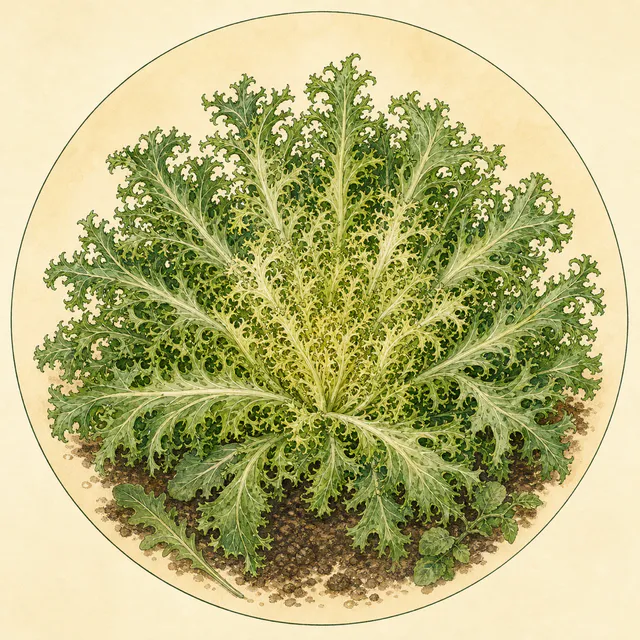
‘Wallone’ is a robust curly, or frisée, endive with a well-filled centre. Large, vigorous rosettes carry finely cut green leaves and provide a good crop for repeated cut-and-come-again picking. Its more open, expansive growth distinguishes it from compact curly heads, while the dense centre still supplies the characteristic tender inner leaves.
It is principally suited to late-summer and autumn production outdoors. Some frost resistance helps extend the harvest into cooler weather. The RHS profile displays the Award of Garden Merit.
Size
- Ultimate height
- 0.1–0.5 metre
- Ultimate spread
- 0.1–0.5 metre
- Time to ultimate size
- 1 year
Although low-growing, the cultivar is vigorous and needs room for its broad rosette of finely divided leaves. Avoid tight spacing that would restrict its well-filled centre or make repeated picking awkward.
Growing conditions
- Suitable soils
- Sand, loam, clay or chalk
- Moisture
- Moist but well-drained
- Soil pH
- Acid, neutral or alkaline
Its broad soil tolerance makes ‘Wallone’ adaptable, but fertile ground and uninterrupted moisture are needed for fast, tender leaf growth. Improve very light or heavy soils with organic matter while retaining free drainage.
Position and hardiness
- Light
- Partial shade
- Aspect
- West-, north- or east-facing
- Exposure
- Sheltered
- Hardiness
- H3 — suitable for relatively mild UK conditions, with useful but limited frost resistance
A cool, partly shaded and sheltered position suits this cultivar. Such conditions reduce heat stress during establishment and support the late-season crop without encouraging premature bolting.
Colour and seasonal interest
The main display is a large green rosette composed of vigorous, very finely cut and curled leaves. The centre fills as the plant matures, giving a denser heart within the more open outer growth. Harvest-stage plants should remain low and leafy rather than producing a flowering stem.
Botanical details
- Family
- Asteraceae
- Native to Great Britain and Ireland
- No
- Foliage
- Deciduous
- Habit
- Bushy
- Name status
- Accepted
How to grow
Cultivation
Grow in fertile soil in partial shade or another cool position. Sow in June or July for an autumn crop. Earlier spring sowings can experience the cold or growth checks that prompt bolting, so use the cultivar in its recommended later window and keep plants steadily moist.
Cut the vigorous outer leaves while young and tender for a cut-and-come-again harvest, leaving the centre to regrow. Alternatively, allow the large rosette and its well-filled middle to mature for a more substantial single harvest. Its modest frost resistance can extend outdoor picking, but protection is prudent when harder weather threatens.
Propagation
Propagate by seed.
Suggested locations
- Allotment or vegetable bed
- Partly shaded kitchen garden
- Sheltered late-season cropping area
Pruning
No pruning is required. Repeated leaf cutting is a harvesting method rather than structural pruning.
Pests
Young shoots may be damaged by slugs and snails. Protect seedlings and inspect within the finely cut foliage; otherwise the cultivar is generally pest-free.
Diseases
The cultivar is generally disease-free. Sensible spacing and well-drained soil help keep its large, well-filled rosette in good condition.