
‘Pancalieri’ AGM
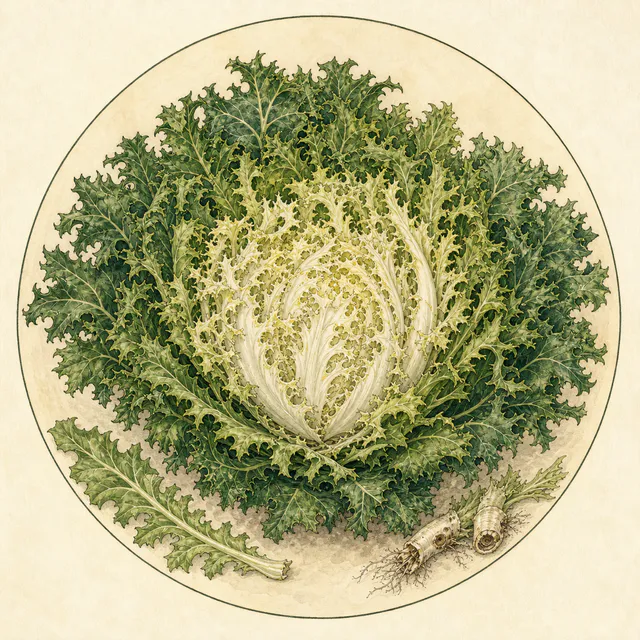
A classic frisée endive with finely serrated dark-green outer foliage and a naturally light, almost self-blanching heart.
The crop growing guide
This Allotment Pro editorial draft summarises the cited RHS guide. Check the source and adjust timings for local conditions.Read the original RHS source
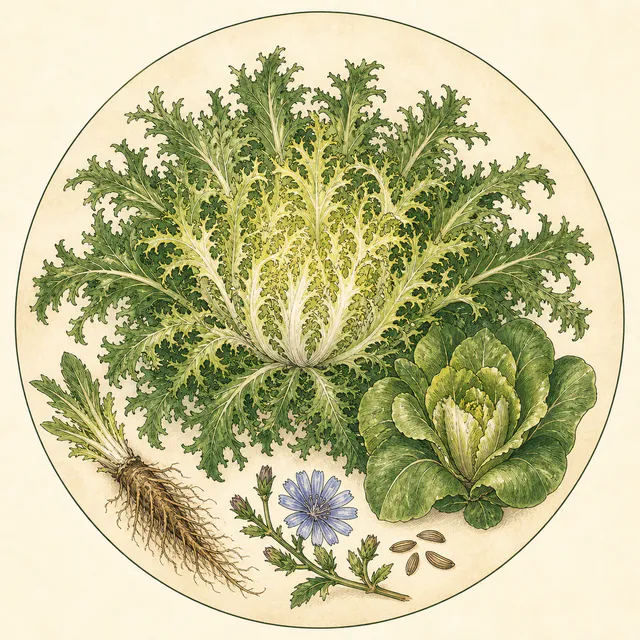
Your season at a glance
Indoors · Early crop
Start bolt-resistant cultivars in warmth, keeping young plants above 5°C (41°F).
Indoors · Successional
Sow small batches every few weeks for a continuous supply of salad leaves and heads.
Outdoors · Direct sow
Begin once soil is at least 15°C (59°F); sow frisée and Batavian types in warm ground.
Winter crop
Sow robust Batavian or escarole cultivars for protected autumn and winter harvesting.
Outdoors
Transplant hardened plants only once local temperatures remain well above 5°C (41°F), earlier in warm southern areas and later in colder northern districts.
Protected winter crop
Plant August-sown Batavian or escarole under cloches, in a greenhouse border or in a large container.
Cut-and-come-again leaves can be picked about one month after sowing.
Mature heads are ready about three months after sowing; winter cropping requires robust types and protection.
Endive is a compact lettuce-like salad crop with pleasantly bitter leaves. It can be harvested young as cut-and-come-again foliage or left to form a mature head. Excluding light from a full-grown plant, known as blanching, produces a paler centre with a milder flavour and more tender texture.
The quickest approach is to grow baby leaves, which occupy little space and may be ready in about a month. Plants commonly provide at least two pickings before flowering and replacement. Mature heads take roughly three months. Sowing small batches repeatedly can keep harvests moving from late spring into winter.
Endive divides into two main leaf forms, each suited to different seasons and uses.
Curly or fringed frisée makes loose rosettes of narrow, finely cut leaves. It suits summer salads and tends to tolerate heat better. Batavian or escarole endive forms broader, flatter and more robust leaves in a range of colours, making it particularly useful for winter heads.
Cultivars vary in bitterness, leaf form, suitability for baby-leaf or whole-head harvesting, self-blanching ability and resistance to bolting. Bolt resistance is especially useful for early sowings exposed to fluctuating temperatures.
A classic frisée endive with finely serrated dark-green outer foliage and a naturally light, almost self-blanching heart.
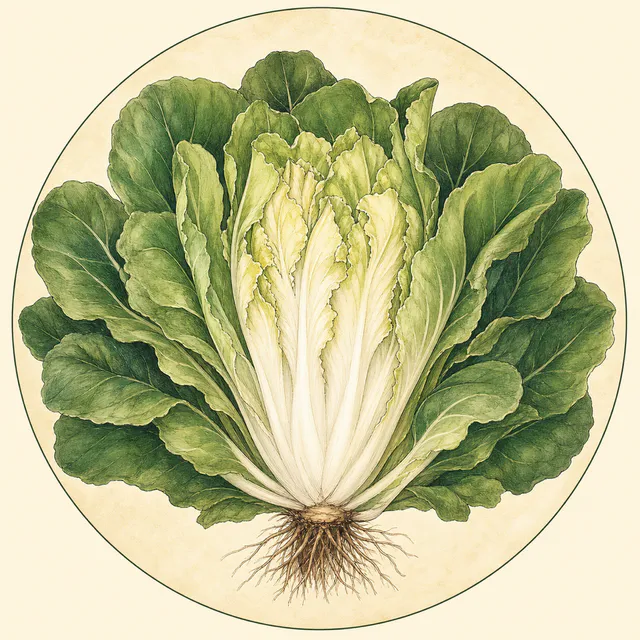
A hardy broad-leaved Batavian or escarole cultivar with heavy green heads, creamy-white hearts and useful resistance to summer bolting.
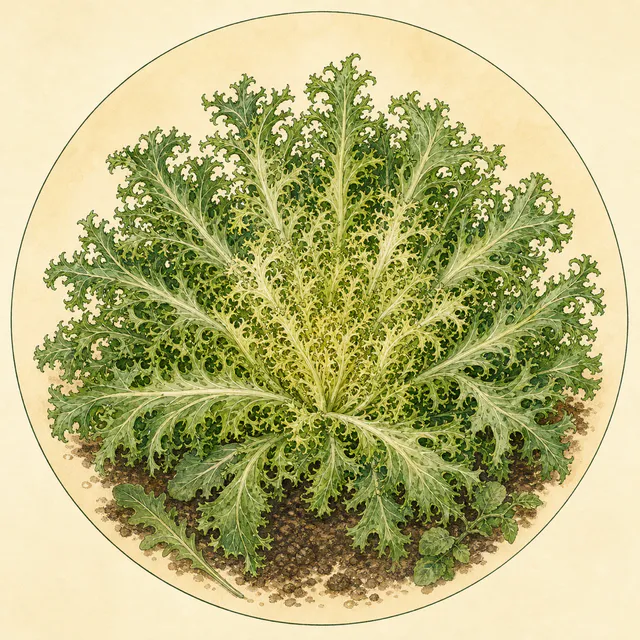
A large vigorous frisée with a well-filled centre and finely cut foliage, suited to late-summer and autumn production and cut-and-come-again picking.
Choose a sunny site, or provide partial shade during summer. Endive grows in most soil types if the ground neither dries severely nor remains waterlogged.
Several weeks before sowing or planting, work in plenty of garden compost or well-rotted manure to improve moisture retention and let disturbed soil settle. For no-dig beds, apply organic mulch and sow or plant through it.
Warmth is essential for reliable germination. Soil must reach at least 15°C (59°F), with 20–22°C (68–72°F) ideal. Sow small batches every few weeks for succession. Young plants exposed for too long below 5°C (41°F) may bolt, so start early crops indoors and use bolt-resistant cultivars.
Sow seed 1cm (½in) deep in small pots, trays or modules filled with moist peat-free seed compost. Keep on a warm sunny windowsill or in a heated propagator. When seedlings have several leaves, prick them carefully into individual modules or pots.
Early sowing can begin in February for late-spring planting, but keep plants indoors until weather is reliably mild. Continue small tray sowings through spring and summer. For winter heads, sow Batavian or escarole in late summer, using pots or trays for transplanting or sowing directly into a greenhouse border or large container.
Direct-sow from late May to August once soil reaches at least 15°C (59°F). Draw drills 1cm (½in) deep and 30cm (1ft) apart. Thin seedlings gradually to 23–38cm (9–13in) for full heads or 5cm (2in) for baby leaves, adding tender thinnings to salads.
In mid- to late August, sow robust Batavian or escarole for winter cropping. Protect with cloches or plastic-free fleece as autumn arrives.
Use a large pot of peat-free multipurpose compost and thin to the same spacings as ground-grown plants. A 40cm (16in) container holds up to three full-sized endives or six smaller cut-and-come-again plants.
Harden indoor-raised plants carefully. Transplant only when local temperatures are reliably well above 5°C (41°F), from late April in warm southern districts but potentially not until early June in colder northern areas. Delay if cold persists because a chill can trigger bolting.
Water plants before and after moving them. Set full-head endive 23–38cm (9–13in) apart and baby-leaf plants 5cm (2in) apart. For containers, use pots 30–40cm (12–16in) wide filled with peat-free multipurpose compost. Protect young plants from slugs and snails, especially during damp weather.
August-sown winter cultivars can be planted outdoors beneath cloches or into a greenhouse border or large container in autumn.
Endive needs steady moisture to keep leaves tender and delay bolting. Established plants are otherwise straightforward, with limited feeding needs.
Water seedlings and mature plants regularly, paying particular attention in free-draining soil, warm weather and containers. Dry soil encourages premature flowering and ends useful harvesting. Keep beds weed-free to reduce competition for water.
Once plants grow strongly, lay a thick mulch of garden compost or well-rotted manure between rows to retain moisture and suppress weeds. Fertile ground usually needs no feeding. On light soil or in a container, give an organic general-purpose liquid feed every two weeks during summer.
Blanch only dry foliage, because covering wet leaves encourages rot. Either tie the head loosely with soft twine, place a tile, cardboard or dinner plate over its centre, or cover the whole head with an upturned bucket or large pot whose drainage holes are sealed.
The centre normally becomes pale and tender in about two weeks, although cool autumn weather takes longer. Check regularly for slugs and snails. Blanch only a few heads at once because they deteriorate quickly afterwards, particularly in warm or rainy conditions, and should be used promptly.
Choose robust Batavian or escarole cultivars for winter cropping. Sow during August and grow outdoors, in a greenhouse border or in a large container. Cover outdoor plants with cloches or plastic-free fleece from October onwards.
Successional sowing provides young leaves from spring to autumn and mature heads from summer into winter. Frisée is especially useful for summer, while broad-leaved Batavian and escarole types withstand the colder cropping season.
Begin cut-and-come-again harvesting roughly one month after sowing. Cut leaves without damaging the centre so plants can regrow; expect at least two pickings before bolting makes replacement necessary.
Whole heads mature about three months after sowing. Cut through the stem with a sharp knife, discard tough outer leaves and use the tender pale centre, where flavour and texture are best. Harvest soon after blanching.
Warm germination, protection from molluscs and prevention of stress are the main priorities. Hot or dry conditions, or prolonged cold while plants are young, can trigger bolting and end the harvest. Maintain moisture and use bolt-resistant varieties for early sowing. Check beneath blanching covers because the tender protected centre attracts slugs and snails.
Bolting is premature flowering and seed production, which makes the leaves increasingly bitter and unusable. Avoid early cold, drought and other sharp changes in growing conditions.
Problem sourceAphids suck sap from young leaves, weakening or distorting growth. Their natural predators are valuable, so inspect heads and manage damaging colonies while preserving beneficial wildlife.
Problem sourceSlugs and snails attack seedlings and tender inner leaves, especially in damp weather and beneath blanching covers. Inspect frequently and protect young plants.
Problem source