
Lettuce · Variety guide
Lactuca sativa ‘Sioux’
Crisphead lettuce ‘Sioux’ AGM
This Allotment Pro editorial draft summarises the cited RHS cultivar profile. Check the source and adjust cultivation decisions for local conditions.Read the original RHS source
Overview
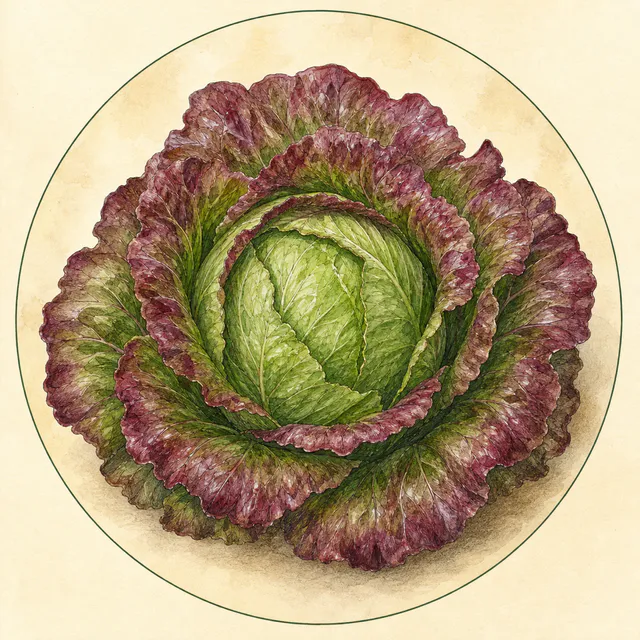
‘Sioux’ is a robust crisphead lettuce with smooth, crisp leaves that develop an attractive red tint around a green heart. The contrast between coloured outer foliage and the fresh green centre makes the mature head easy to recognise and gives mixed salads both texture and colour.
This cultivar is slow to bolt, an advantage when warm or changeable weather might otherwise cause a lettuce head to elongate prematurely. It is grown as an annual vegetable and is typically ready to harvest from June. The RHS Award of Garden Merit identifies it as a reliable garden choice in appropriate conditions.
Size
- Ultimate height
- 0.1–0.5 metre
- Ultimate spread
- 0.1–0.5 metre
- Time to ultimate size
- 1 year
Allow enough final spacing for the robust head to broaden and for air to circulate around the outer leaves. Crowding reduces head quality and creates humid pockets that favour disease.
Growing conditions
- Suitable soils
- Chalk, clay, loam or sand
- Moisture
- Moist but well-drained
- Soil pH
- Acid, neutral or alkaline
Plant in fertile soil that remains evenly moist but never waterlogged. Improve light or sandy ground with well-rotted organic matter before sowing, and keep the shallow root zone watered consistently as the crisp head develops.
Position and hardiness
- Light
- Full sun
- Aspect
- South- or west-facing
- Exposure
- Sheltered
- Hardiness
- H2 — tolerant of low temperatures but not surviving prolonged freezing
A sunny sheltered position encourages compact growth and good leaf colour. Use cloches or fleece to protect early sowings from cold, but ventilate protection and remove it once plants are established in suitable weather.
Colour and seasonal interest
The smooth outer leaves are green with a clear red tint, while the crisp enclosed heart remains green. This two-tone colouring is the cultivar's strongest visual feature at harvest. ‘Sioux’ is grown for its leaves and should be cut before the centre rises; flowers and seed heads are not part of a normal edible crop.
Botanical details
- Family
- Asteraceae
- Native to Great Britain and Ireland
- No
- Foliage
- Deciduous
- Habit
- Bushy
- Name status
- Accepted
How to grow
Cultivation
Grow in full sun in fertile, moisture-retentive, well-drained soil. Sow in small batches at roughly fortnightly intervals to spread the harvest. Thin seedlings early or transplant module-raised plants without burying their central growing points.
Protect early crops with cloches or fleece. Keep growth steady with morning watering at soil level, especially as heads begin to firm, and control weeds by shallow cultivation. Although ‘Sioux’ is slow to bolt, harvest promptly when the head feels crisp and full rather than leaving it through prolonged heat.
Propagation
Propagate by seed. Sow thinly in shallow drills or individual modules and avoid very hot seedbeds, because high temperatures can inhibit lettuce germination.
Suggested locations
- Sheltered vegetable bed
- Allotment row
- Raised bed
- Large container
Pruning
No pruning is required. Remove yellow or damaged outer foliage and cut the complete head at harvest.
Pests
May be susceptible to slugs and snails. Check beneath the low outer leaves and use suitable barriers or biological control if damage becomes persistent.
Diseases
May be susceptible to grey mould and lettuce downy mildew. Space plants properly, water at soil level early in the day and promptly remove affected or decaying foliage.