
Cauliflowers · Variety guide
Brassica oleracea (Botrytis Group) ‘Graffiti’
Cauliflower ‘Graffiti’
This Allotment Pro editorial draft summarises the cited RHS cultivar profile. Check the source and adjust cultivation decisions for local conditions.Read the original RHS source
Overview
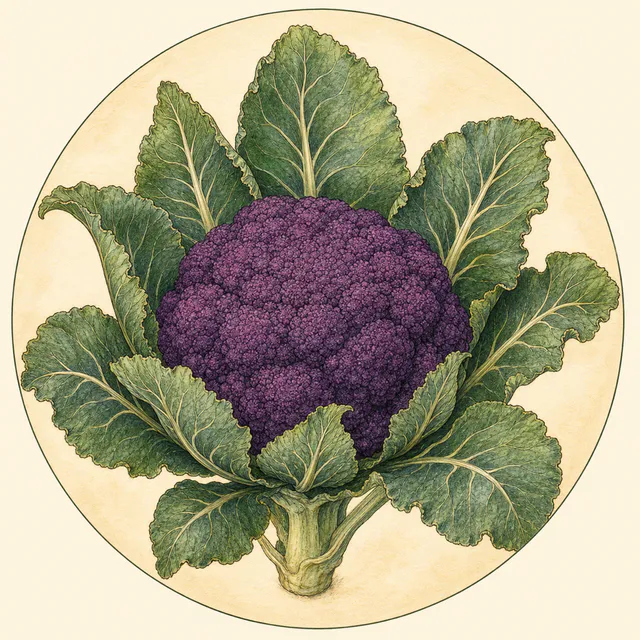
‘Graffiti’ is a striking late-summer and autumn cauliflower producing dense, rich deep-purple curds. The colour becomes darker with greater exposure to sunlight. Its excellent flavour and dramatic appearance bring ornamental value to the kitchen garden as well as colour to the plate, with harvests from August to October.
Size
- Ultimate height
- 0.1–0.5 metres
- Ultimate spread
- 0.1–0.5 metres
- Time to ultimate size
- 1 year
The clump-forming plant completes its crop in one annual cycle.
Growing conditions
- Suitable soils
- Loam and sand
- Moisture
- Well-drained
- Soil pH
- Neutral or alkaline
Prepare fertile ground with good drainage and keep moisture available during curd formation.
Position and hardiness
- Light
- Full sun
- Aspect
- South- or west-facing
- Exposure
- Sheltered
- Hardiness
- H3 — hardy in coastal and relatively mild UK locations
Full sun promotes strong growth and intensifies the distinctive purple colouring.
Colour and seasonal interest
The dense deep-purple curd is the defining feature. Heads darken as sunlight reaches them and provide strong visual interest from late summer into autumn.
Botanical details
- Family
- Brassicaceae
- Native to Great Britain and Ireland
- No
- Foliage
- Deciduous
- Habit
- Clump-forming
- Name status
- Accepted
- Breeder
- Michael John Day
- Synonym
- Brassica ‘Purple Graffiti’
How to grow
Cultivation
Grow in full sun in fertile, moist but well-drained soil. Sow indoors during March and April and transplant outdoors in early summer, or sow directly from April to May. Maintain even growth through regular watering and firm young plants after transplanting.
Propagation
Propagate by seed, sown indoors or outdoors.
Pruning
No pruning is required. Leave heads exposed if the deepest purple colour is desired.
Pests
Potential pests include birds, cabbage caterpillars, cabbage gall weevil, cabbage root fly, cabbage whitefly, cutworms, flea beetle, mealy cabbage aphid, slugs and snails, and swede midge.
Diseases
Possible diseases are black rot, club root, downy mildew, foot and root rot, leaf spot and white blister.