
Spinach · Variety guide
Spinacia oleracea ‘Mikado’ AGM
Spinach ‘Mikado’
This Allotment Pro editorial draft summarises the cited RHS cultivar profile and its linked crop guidance. Check the sources and adjust cultivation decisions for local conditions.Read the original RHS source
Overview
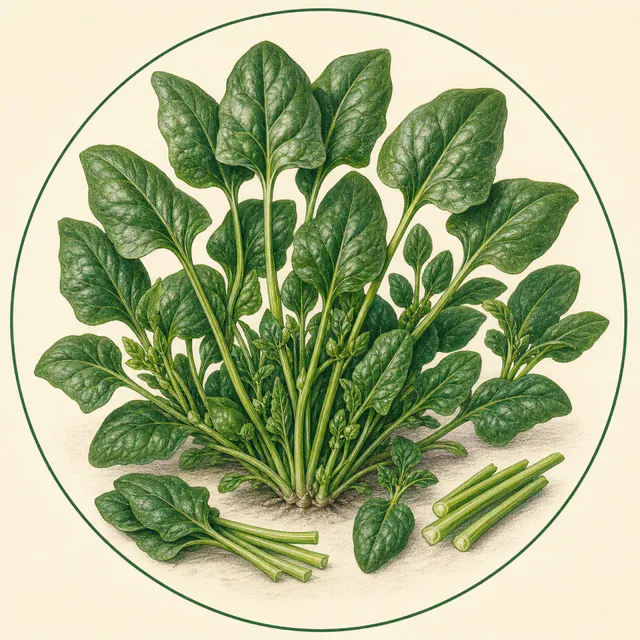
‘Mikado’ is a leafy oriental spinach with dark-green leaves carried on long stems. Side-shoot production supports a continuous harvest, while the cultivar’s slow-bolting character makes it especially useful when repeated picking is wanted. The RHS profile also lists ‘Oriento’ as an alternative common name and Spinacia oleracea ‘Oriento’ as a synonym.
This annual or biennial edible is clump-forming and has the RHS Award of Garden Merit. Sow it as a cut-and-come-again crop, taking outer leaves and side shoots while the centre continues growing, or allow plants to develop larger leaves for cooking.
Size
- Ultimate height
- 0.1–0.5 metres
- Ultimate spread
- 0.1–0.5 metres
- Time to ultimate height
- 1 year
- Habit
- Clump-forming
Its compact footprint suits beds and containers. Use the parent spinach guide’s final spacing where full-sized plants are required; closer sowings can be harvested young before crowding reduces airflow.
Growing conditions
- Suitable soils
- Chalk, clay, loam or sand
- Moisture
- Moist but well drained
- Soil pH
- Acid, alkaline or neutral
The exact profile recommends fertile soil rich in organic matter with a steady moisture supply. Prepare the ground with mature compost and water before drought stress develops, since dry conditions can reduce leaf quality and encourage flowering. Avoid waterlogging despite the need for consistent moisture.
Position and hardiness
- Light
- Full sun or partial shade
- Aspect
- South-, east- or west-facing
- Exposure
- Sheltered
- Hardiness
- H5 — hardy in most places throughout the UK, even in severe winters
Winter crops need a sunny position, while summer crops benefit from a little shade. This seasonal adjustment helps maintain tender leaves and complements ‘Mikado’s’ slow-bolting character. A sheltered position reduces wind damage and moisture loss from the broad leaves.
Colour and seasonal interest
| Season | Foliage |
|---|---|
| Spring | Dark green |
| Summer | Dark green |
| Autumn | Dark green |
| Winter | Dark green where growth continues |
The defining visual features are smooth dark-green leaves, elongated leaf stalks and fresh side shoots. It is grown for useful edible foliage rather than conspicuous flowers or ornamental fruit.
Botanical details
- Family
- Amaranthaceae
- Native to Great Britain and Ireland
- No
- Lifecycle
- Annual or biennial
- Foliage
- Deciduous
- Habit
- Clump-forming
- Name status
- Accepted
- Award
- RHS Award of Garden Merit
How to grow
Cultivation
Sow from February under biodegradable fleece or cloches and continue to the end of May, following the parent crop guide for depth, rows and thinning. For later harvests, use the parent guide’s late-summer sowing window. Keep the root zone evenly moist and harvest outer leaves and side shoots regularly to sustain production.
For winter cropping, choose the sunniest available bed and provide protection where exposed. In warmer weather, light shade and dependable watering help delay bolting. Containers are suitable if they are sufficiently wide and do not dry out.
Propagation
Propagate by seed. Sow into prepared soil or modules, keep seedlings evenly moist and thin or transplant without allowing plants to become congested.
Suggested locations
- Allotment or kitchen garden
- Patio container
- Sheltered edible border
- Cool-season raised bed
Pruning
No pruning is required. Harvest clean leaves selectively and remove flower stems if plants begin to bolt and the leaves are still usable.
Pests
The exact profile says plants are generally pest-free but may be damaged by slugs and pigeons. Protect seedlings and inspect beneath foliage, particularly in damp weather.
Diseases
Spinach downy mildew may occur. Provide airflow, avoid prolonged leaf wetness and remove badly affected material rather than composting it beside the crop.