
Mikado AGM
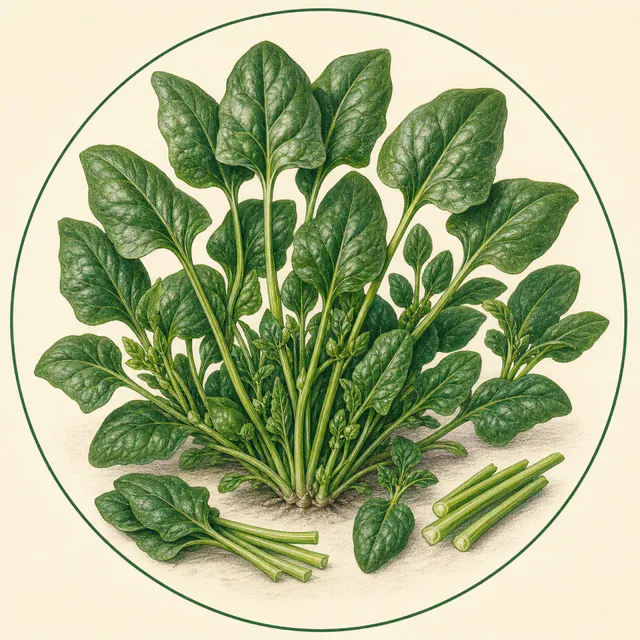
An upright Oriental spinach with large pointed dark-green leaves and useful resistance to both bolting and mildew.
The crop growing guide
This Allotment Pro editorial draft summarises the cited RHS guide. Check the source and adjust timings for local conditions.Read the original RHS source
Your season at a glance
Indoors · Module Sow
Start individual seeds for an early crop while minimising later root disturbance
Outdoors · Direct Sow
Sow in cool conditions for late-spring and summer leaves
Outdoors · Direct Sow
Sow hardy cultivars once excessive heat has passed for autumn or early-spring harvests
Outdoors · Baby Leaf
Begin picking tender young leaves
Outdoors · Mature Leaf
Pick full-sized leaves or cut an established crop just above its base
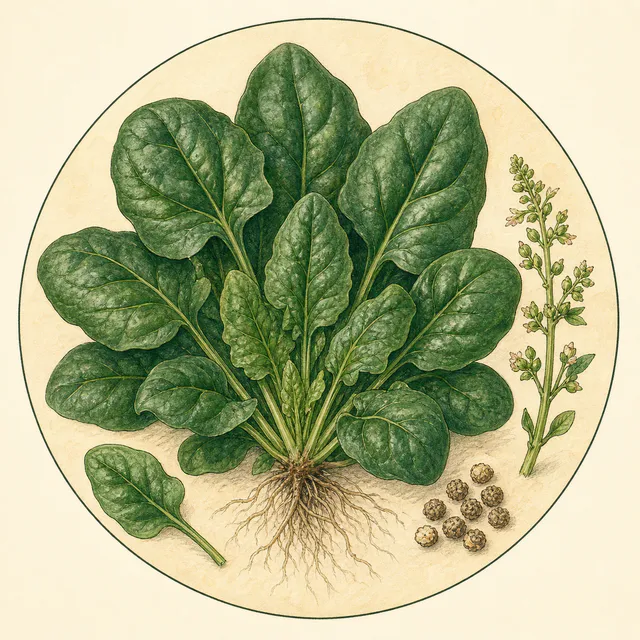
Spinach is a compact, fast-growing leafy crop that gives repeated pickings in small plots and containers. Young leaves are mild and succulent for salads, while larger leaves are best lightly cooked. Small regular sowings and cut-and-come-again harvesting can extend the supply through much of the year.
Spinach needs fertile soil that retains moisture without drying out. It performs best at 15–20°C (60–70°F); cold shocks and hot dry conditions can trigger premature flowering, or bolting, which makes leaves bitter and ends the crop. Use light shade in warmer weather, water consistently and sow little and often.
Annual spinach varieties differ in leaf shape, stem colour, hardiness and resistance to bolting or downy mildew. Savoy types have large puckered leaves. Smooth-leaved kinds are flatter, more upright and generally more robust, including in warmer conditions. Choose a hardy cultivar for overwintering and check the packet's exact timing.
Perpetual spinach is actually leaf beet or chard and can crop for many months. New Zealand spinach, tree spinach, red orach and Malabar spinach are also distinct crops with different temperature needs rather than varieties of annual spinach.
An upright Oriental spinach with large pointed dark-green leaves and useful resistance to both bolting and mildew.
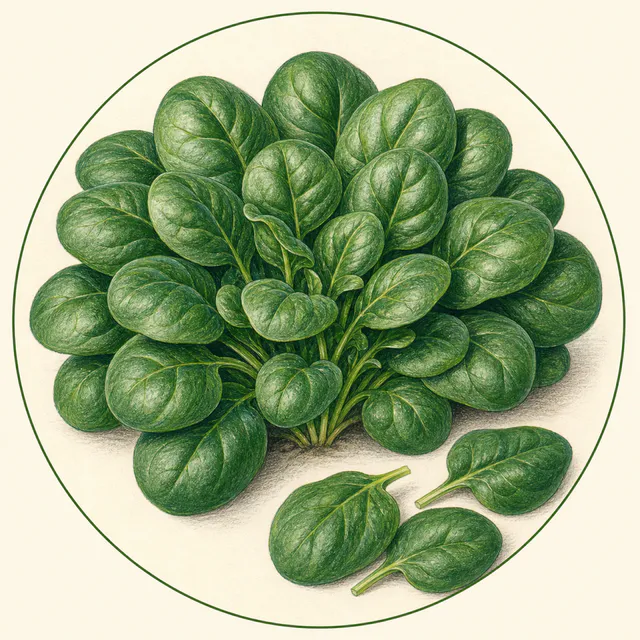
A reliable high-yielding cultivar with smooth rounded dark-green leaves.
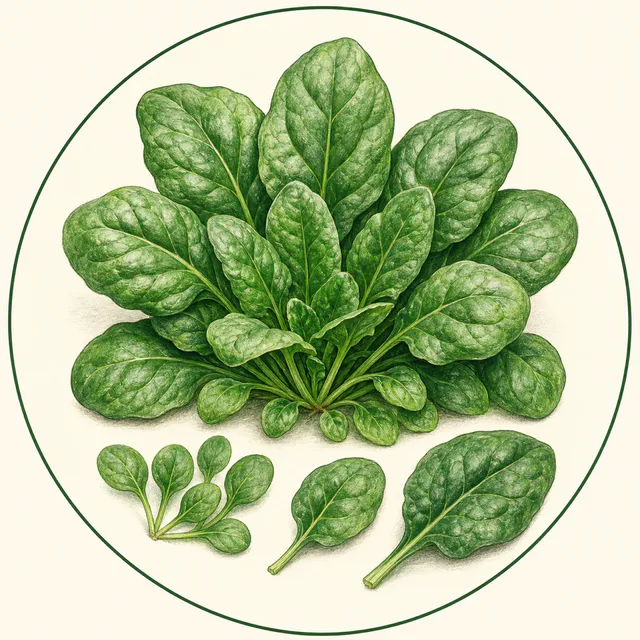
A tasty slow-bolting cultivar suited to quick container crops, with mild baby leaves and fuller-flavoured mature foliage.
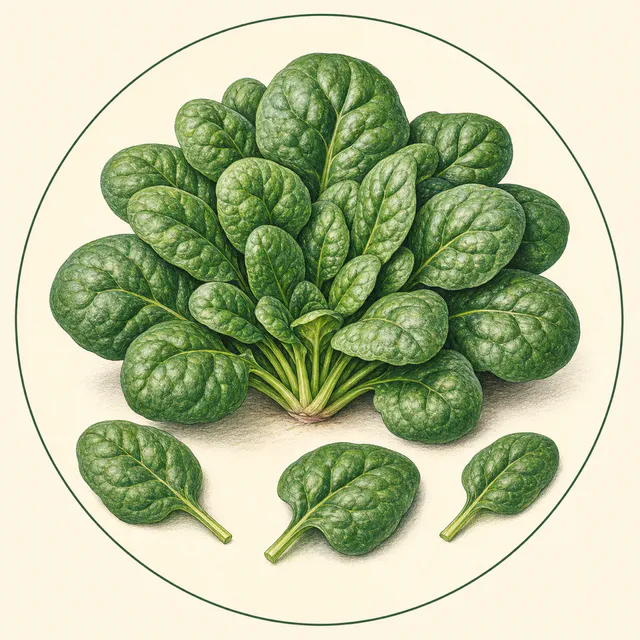
A cultivar with deep-green, slightly puckered leaves that are tender and juicy with a mildly sweet earthy flavour.
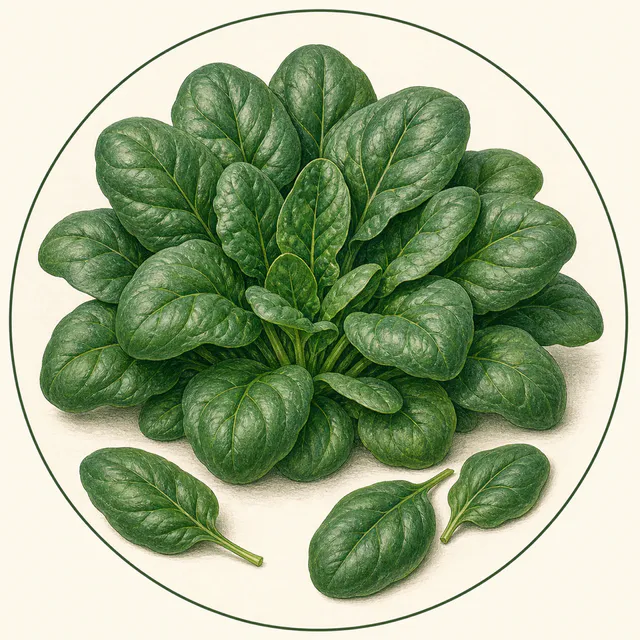
A good-flavoured cultivar with rounded glossy leaves, resistance to downy mildew and bolting, and the ability to overwinter under cover.
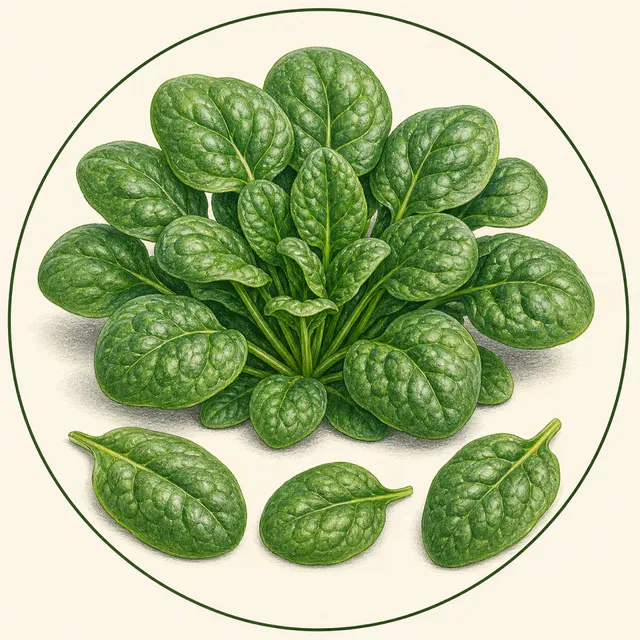
A productive cultivar with thick juicy rounded leaves and resistance to both bolting and downy mildew.
Spinach grows best in fertile moisture-retentive soil. Before sowing or planting, fork in generous garden compost or well-rotted manure. Poor soil can also receive an organic general-purpose fertiliser. For no-dig cultivation, mulch ahead of sowing and plant through the organic layer.
Direct outdoor sowing usually suits spinach better than transplanting because disturbed roots can encourage bolting. Germination is unreliable in excessive heat or cold, so use repeated spring and late-summer or autumn sowings, choosing hardy varieties for overwintering.
For an early crop, start individual seeds in modules from early spring. The separate cells reduce root disturbance when seedlings are later planted out.
Sow in mid- to late spring for late-spring and summer leaves, or in late summer to early autumn for autumn and early-spring crops. Delay the later sowing if temperatures remain high, but allow enough time for plants to establish before winter. Choose sun or partial shade, scatter seed thinly in a prepared drill and keep rows well spaced.
Thin seedlings once they are large enough to handle, keeping the strongest. A few weeks later, harvest alternate plants for salads so the remainder can mature. Baby-leaf crops do not usually need thinning.
Harden off module-raised or bought plug plants and transplant them from mid-spring once they reach about 10cm (4in). Choose sun or light shade, handle roots carefully, firm gently and water well. Adequate final spacing improves airflow and reduces downy mildew risk.
Autumn plants can crop in a greenhouse border. In mild areas, hardy types may overwinter beneath cloches or in a cold frame.
#### Key measurements and instructions
Transplant height, equivalent to 4in: about 10cm (Outdoors · Transplant). Final plant spacing, equivalent to 6in: 15cm (Outdoors). Minimum container width and depth, equivalent to 1ft: 30cm (Container).
Keep spinach free of weeds, irrigate during warm dry weather and protect tender growth from slugs and snails. Steady uninterrupted growth is the key to tender leaves and delayed bolting.
Spinach is thirsty. Water in dry weather before seedlings wilt or growth stops, paying special attention to containers. Morning watering leaves plants hydrated through the day while avoiding the damp overnight conditions that favour slugs, snails and downy mildew.
Remove weeds while spinach is young so there is no competition for light and water. Open ground also reduces mollusc hiding places and improves air movement around leaves.
Hot dry conditions bring forward the tall flower stalk that ends useful leaf production. Keep soil moist, position containers away from intense midday sun and choose bolt-resistant cultivars in warm sites. Once a flower stalk appears, remove and compost the plant because its leaves become bitter.
Use hardy varieties and protect them with cloches or biodegradable fleece from October unless the climate is very mild. A greenhouse border, greenhouse container or cold frame provides another route for autumn crops; give early spring sowings similar protection.
Baby leaves may be ready one month after sowing and mature leaves after about two months. Pick a few outer leaves from each plant every few weeks, or let plants establish and cut the entire crop just above the base. A strong root system should regrow for at least one further harvest.
Pick regularly to stimulate new foliage. Use tender leaves raw and cook larger leaves briefly; allow for the large reduction in volume during cooking.
Hot dry weather encourages bolting, slugs and snails eat soft young leaves, pigeons may damage seedlings, and humid overcrowded crops are vulnerable to downy mildew. Consistent moisture, suitable seasonal sowing, adequate spacing and protection address the main risks.
Cold shocks, changing day length or hot dry weather can make spinach run to seed prematurely. Leaves then become bitter, so maintain steady growth and remove affected plants.
Problem sourceDowny mildew can spoil leaves and reduce yield in humid, crowded crops. Space plants well, improve air circulation and avoid leaving foliage wet overnight.
Problem sourcePigeons may tear leaves or eat young plants. Secure netting over vulnerable seedlings so birds cannot land on or reach through it.
Problem sourceSlugs and snails feed on tender seedlings and foliage, especially in damp mild conditions. Remove hiding places and inspect regularly after wet weather.
Problem source