
French Beans · Variety guide
Phaseolus vulgaris ‘Golden Gate’
Bean (climbing French) ‘Golden Gate’
This Allotment Pro editorial draft summarises the cited RHS cultivar profile. Check the source and adjust cultivation decisions for local conditions.Read the original RHS source
Overview
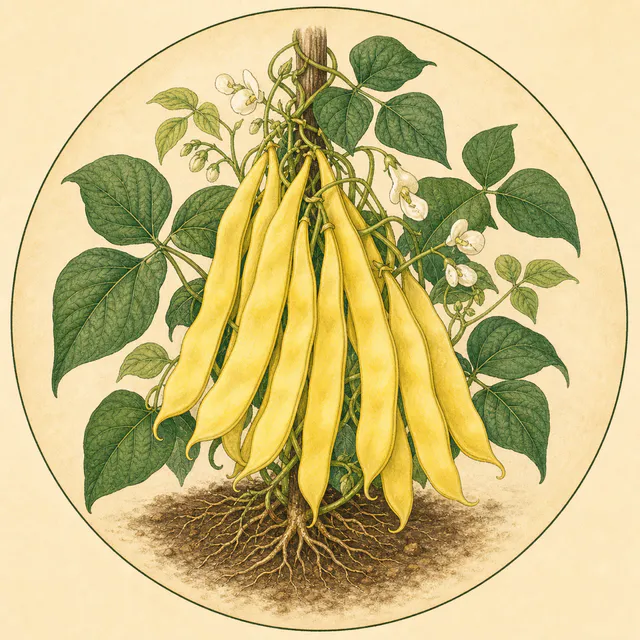
‘Golden Gate’ is an annual climbing French bean with green trifoliate foliage. White summer flowers produce a good crop of large, flat, pale-yellow pods. Their clear wax-bean colour makes them especially conspicuous against the leaves and easier to locate at picking time than green cultivars.
The vigorous vine bears heavily over a long season when pods are harvested regularly. The RHS profile displays the Award of Garden Merit, recognising the combination of ornamental pod colour, productive climbing habit and useful edible crop.
Size
- Ultimate height
- 2.5–4 metres
- Ultimate spread
- 0.5–1 metre
- Time to ultimate size
- 1 year
Provide a tall strong frame before sowing. The eventual vine can grow well beyond ordinary picking height, so stop it at the support top and guide side-shoots where the broad yellow pods remain visible and reachable.
Growing conditions
- Suitable soils
- Chalk, clay, loam or sand
- Moisture
- Moist but well-drained
- Soil pH
- Acid, neutral or alkaline
This cultivar accepts varied soil textures and pH values. Prepare fertile, organic-rich ground that retains moisture around the roots without waterlogging, then water reliably through flowering and the long podding season.
Position and hardiness
- Light
- Full sun
- Aspect
- East-, south- or west-facing
- Exposure
- Sheltered
- Hardiness
- H2 — tolerant of low temperatures but unable to survive freezing
Treat ‘Golden Gate’ as a frost-tender summer annual. A sunny sheltered position supports the tall vine, encourages white flowers and helps its flat yellow pods mature evenly.
Colour and seasonal interest
| Season | Flowers | Foliage | Fruit |
|---|---|---|---|
| Spring | — | Green | — |
| Summer | White | Green | Pale yellow |
The large flat yellow pods are the defining feature and should dominate cultivar artwork and field identification. Pick while their surfaces are smooth and before developing beans make them coarse.
Botanical details
- Family
- Fabaceae
- Native to Great Britain and Ireland
- No
- Foliage
- Deciduous
- Habit
- Climbing
- Name status
- Accepted
How to grow
Cultivation
Grow up a tall support in fertile, moisture-retentive soil with good light. Water during dry periods once flowering begins, keep the base mulched and pick the pale-yellow pods frequently to sustain the cultivar’s heavy long-season production.
Propagation
Propagate by seed.
Suggested locations
- Cottage or informal garden
- Climber and wall planting
- Edible garden or allotment
Pruning
No formal pruning is required. Stop the leading shoot at the support top as a practical training measure.
Pests
May be susceptible to slugs, snails and blackfly. Protect young plants and inspect tender shoot tips and leaf undersides during summer.
Diseases
May be susceptible to runner and French bean rust. Avoid crowding, maintain airflow and remove infected crop remains after the final harvest.