
Lettuce · Variety guide
Lactuca sativa ‘Navara’
Oakleaf lettuce ‘Navara’ AGM
This Allotment Pro editorial draft summarises the cited RHS cultivar profile. Check the source and adjust cultivation decisions for local conditions.Read the original RHS source
Overview
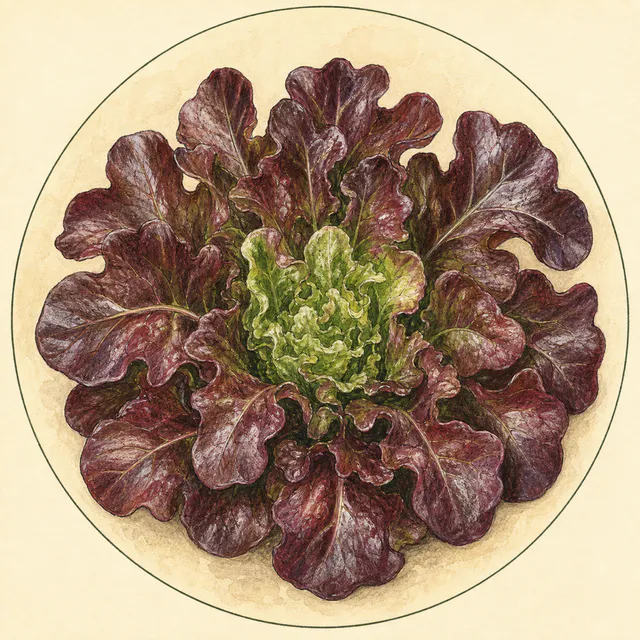
‘Navara’ is a compact loose-leaf oakleaf lettuce with a loose heart. Its glossy foliage is very dark red across the outer plant while the centre remains green, creating a strong colour contrast within the low rosette.
The cultivar is resistant to downy mildew and aphids, useful qualities for a leafy crop harvested close to the soil. Its compact size and richly coloured oak-shaped leaves make it suitable for containers, mixed salad beds and repeated young-leaf picking. It holds the RHS Award of Garden Merit.
Size
- Ultimate height
- 0.1–0.5 metre
- Ultimate spread
- 0.1–0.5 metre
- Time to ultimate size
- 1 year
The rosette is compact but spreads through its lobed leaves. Thin to about 25cm for mature plants, or use closer spacing when growing specifically for young cut-and-come-again foliage.
Growing conditions
- Suitable soils
- Chalk, clay, loam or sand
- Moisture
- Moist but well-drained
- Soil pH
- Acid, neutral or alkaline
Grow in fertile soil that holds moisture while draining freely. Even moisture supports glossy tender growth and reduces stress, especially during warm weather. Incorporate well-rotted organic matter before sowing or planting.
Position and hardiness
- Light
- Full sun or partial shade
- Aspect
- East-, south- or west-facing
- Exposure
- Sheltered
- Hardiness
- H2 — tolerant of low temperatures but not surviving prolonged freezing
Good light develops the darkest red colour, while partial shade may help prevent heat stress in midsummer. A sheltered position protects the delicate lobed leaves. Use suitable crop cover during cold early and late-season conditions.
Colour and seasonal interest
Glossy, oak-shaped outer leaves mature to a very dark wine red, almost burgundy, while the loose central growth remains fresh green. The leaf blades are rounded and distinctly lobed rather than finely frilled. Harvest as a loose heart or by selecting outer leaves before the plant elongates to flower.
Botanical details
- Family
- Asteraceae
- Native to Great Britain and Ireland
- No
- Foliage
- Deciduous
- Habit
- Tufted
- Name status
- Accepted
How to grow
Cultivation
Grow in fertile, moist but well-drained soil in full sun or partial shade. Sow thinly in shallow drills from spring into summer and repeat small sowings for continuity. Thin mature plants to around 25cm, keeping the central growing point clear.
Maintain even moisture with morning watering at soil level and keep weeds down without disturbing shallow roots. Pick outer leaves while leaving the loose centre intact for regrowth, or harvest the complete compact rosette once full. Resistance to aphids and downy mildew lowers risk but good hygiene and airflow are still valuable.
Propagation
Propagate by seed. Sow in succession through the appropriate spring and summer period, avoiding very hot seedbeds that may inhibit germination.
Suggested locations
- Patio container
- Raised salad bed
- Vegetable plot
- Edible ornamental border
Pruning
No pruning is required. Outer-leaf picking is a harvest method; leave the green centre undamaged if further growth is wanted.
Pests
‘Navara’ is resistant to aphids but may still be susceptible to slugs and snails. Check beneath the low rosette and use suitable controls if damage occurs.
Diseases
The cultivar is resistant to lettuce downy mildew and is generally disease free. Maintain crop rotation, avoid crowding and remove decaying foliage to preserve plant health.