
Cauliflowers · Variety guide
Brassica oleracea (Botrytis Group) ‘Raleigh’
Cauliflower ‘Raleigh’
This Allotment Pro editorial draft summarises the cited RHS cultivar profile. Check the source and adjust cultivation decisions for local conditions.Read the original RHS source
Overview
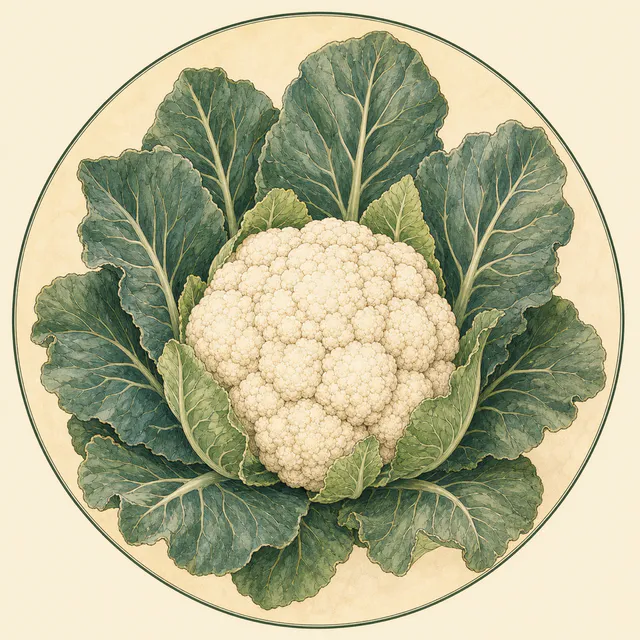
‘Raleigh’ is a summer cauliflower producing a pure-white domed curd enclosed by vigorous blue-green leaves. Its excellent flavour suits kitchen use, while strong resistance to pink discolouration also makes the uniform head useful for exhibition. Harvest runs from July to September.
Size
- Ultimate height
- 0.5–1 metre
- Ultimate spread
- 0.1–0.5 metres
- Time to ultimate size
- 1 year
The relatively tall leafy clump develops its central curd within one season.
Growing conditions
- Suitable soils
- Chalk, clay, loam and sand
- Moisture
- Well-drained or moist but well-drained
- Soil pH
- Neutral or alkaline
This adaptable cultivar accepts all four common soil textures when fertile ground remains firm and freely drained.
Position and hardiness
- Light
- Full sun
- Aspect
- South- or west-facing
- Exposure
- Sheltered
- Hardiness
- H3 — suited to mild UK conditions and its July-to-September summer crop
Choose a sunny sheltered position and maintain even moisture to preserve curd quality.
Colour and seasonal interest
The profile assigns no seasonal table colours, but describes a pure-white domed head within vigorous blue-green foliage.
Botanical details
- Family
- Brassicaceae
- Native to Great Britain and Ireland
- No
- Foliage
- Deciduous
- Habit
- Clump-forming
- Name status
- Accepted
How to grow
Cultivation
Grow in full sun in fertile, moist but well-drained soil. Direct-sow from April to June and transplant to the final position by the end of June, handling roots carefully.
Propagation
Propagate by seed outdoors or in indoor modules.
Pruning
No pruning is required. Cut the domed curd before it loosens or discolours.
Pests
Possible pests include birds, cabbage caterpillars, cabbage gall weevil, cabbage root fly, cabbage whitefly, cutworms, flea beetle, mealy cabbage aphid, slugs and snails, and swede midge.
Diseases
Possible diseases are black rot, club root, downy mildew, grey mould, foot and root rot, leaf spot and white blister. The cultivar has good resistance to pinking of the curd.