
Cauliflowers · Variety guide
Brassica oleracea (Botrytis Group) ‘Tirza’
Cauliflower ‘Tirza’
This Allotment Pro editorial draft summarises the cited RHS cultivar profile. Check the source and adjust cultivation decisions for local conditions.Read the original RHS source
Overview
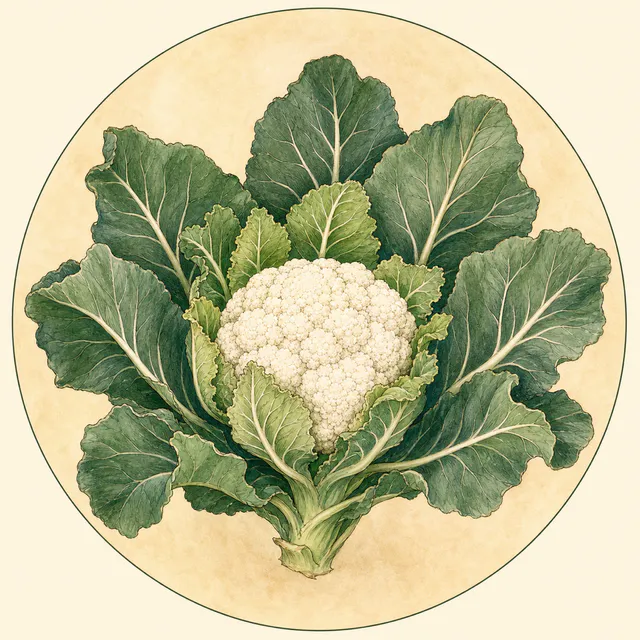
‘Tirza’ is an early summer cauliflower producing compact heads of pure-white curds. It is described as the earliest cauliflower of the season, crops heavily and shows some disease resistance. Its compact heads work particularly well in small spaces or containers.
Size
- Ultimate height
- 0.1–0.5 metres
- Ultimate spread
- 0.5–1 metre
- Time to ultimate size
- 1 year
Although low-growing, its foliage may spread broadly, so allow enough room for healthy leaf development.
Growing conditions
- Suitable soils
- Loam and sand
- Moisture
- Well-drained
- Soil pH
- Neutral or alkaline
Use fertile soil with reliable drainage, while supplying water consistently during active growth.
Position and hardiness
- Light
- Full sun
- Aspect
- South- or west-facing
- Exposure
- Sheltered
- Hardiness
- H3 — hardy in coastal and relatively mild UK locations
Its early schedule requires protected overwintering before plants move into a sunny, sheltered outdoor position.
Colour and seasonal interest
No seasonal colours are assigned. The main display is a compact pure-white curd surrounded by green foliage in early summer.
Botanical details
- Family
- Brassicaceae
- Native to Great Britain and Ireland
- No
- Foliage
- Deciduous
- Habit
- Clump-forming
- Name status
- Accepted
How to grow
Cultivation
Grow in full sun in fertile, moist but well-drained soil. Sow indoors in October and overwinter seedlings under glass, then plant them in their final position in March or April. Containers need enough compost volume, fertility and steady watering to sustain the spreading foliage.
Propagation
Propagate by seed, with the early crop started indoors.
Suggested locations
Suitable for patios and container planting as well as beds and allotments.
Pruning
No pruning is required.
Pests
Potential pests include birds, cabbage caterpillars, cabbage gall weevil, cabbage root fly, cabbage whitefly, cutworms, flea beetle, mealy cabbage aphid, slugs and snails, and swede midge.
Diseases
Possible diseases are black rot, club root, downy mildew, foot and root rot, grey mould, leaf spot and white blister, although the cultivar shows some disease resistance.