
Leeks · Variety guide
Allium porrum ‘Blauwgroene Winter’ – Bandit AGM
Leek ‘Blauwgroene Winter’ – Bandit AGM
This Allotment Pro editorial draft summarises the cited RHS cultivar profile. Check the source and adjust cultivation decisions for local conditions.Read the original RHS source
Overview
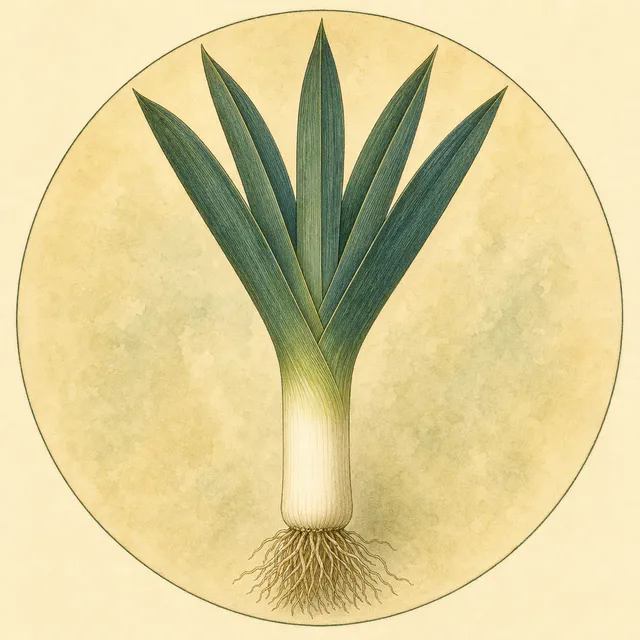
‘Blauwgroene Winter’ – Bandit is a hardy perennial leek grown as an annual vegetable. This open-pollinated cultivar has thick upright blue-green leaves and produces mid-length leeks averaging about 4cm in diameter with around 10cm of blanched stem. Harvest begins from January, depending on sowing time.
Its stout measured white shank and dark blue-green winter leaf fan distinguish it from longer early leeks. The RHS profile displays an Award of Garden Merit and also lists the common shorthand ‘Bandit’ and synonym Allium porrum ‘Bandit’.
Size
- Ultimate height
- 0.5–1 metre
- Ultimate spread
- 0.1–0.5 metre
- Time to ultimate size
- 1 year
The plant is tall in leaf but mid-length in edible stem. Its average 4cm diameter gives the shank a substantial, sturdy appearance.
Growing conditions
- Suitable soils
- Chalk, clay, loam or sand
- Moisture
- Moist but well-drained
- Soil pH
- Acid, neutral or alkaline
Grow in organic-rich ground with steady moisture and free drainage. Even growth is important for thick stems that stand through winter.
Position and hardiness
- Light
- Full sun or partial shade
- Aspect
- South- or west-facing
- Exposure
- Exposed or sheltered
- Hardiness
- H5 — hardy in most places throughout the UK, even in severe winters
Full sun is preferred, although partial shade is tolerated. H5 hardiness supports its January and later winter harvest window.
Colour and seasonal interest
Thick upright foliage remains blue-green through the seasons. Beneath it, a stout mid-length stem has approximately 10cm of clean white blanch. The contrast between dark winter leaves and pure pale shank is the main ornamental feature.
Botanical details
- Family
- Amaryllidaceae
- Native to Great Britain and Ireland
- No
- Foliage
- Evergreen
- Habit
- Clump forming
- Name status
- Unresolved
How to grow
Cultivation
Grow in moist but well-drained soil rich in organic matter, preferably in full sun, though partial shade is tolerated. Draw soil around the stems in late summer and early autumn to lengthen the blanch while keeping the leaf fans clean.
Maintain even moisture and leave healthy plants standing into winter. Begin checking the stout shanks from January.
Propagation
Propagate by seed. As an open-pollinated cultivar, it is raised conventionally from seed rather than vegetative divisions.
Suggested locations
- Winter vegetable plot
- Exposed or sheltered allotment row
- Organic-rich raised bed
- Late-season harvesting area
Pruning
No pruning is required. Remove damaged leaves or premature flower stalks only.
Pests
May be susceptible to slugs and snails, leek moth, onion fly and onion thrips.
Diseases
May be susceptible to leek rust, onion white rot, downy mildews, foot and root rots, fungal leaf spots and smuts.