
Cauliflowers · Variety guide
Brassica oleracea (Botrytis Group) ‘Sunset’
Cauliflower ‘Sunset’
This Allotment Pro editorial draft summarises the cited RHS cultivar profile. Check the source and adjust cultivation decisions for local conditions.Read the original RHS source
Overview
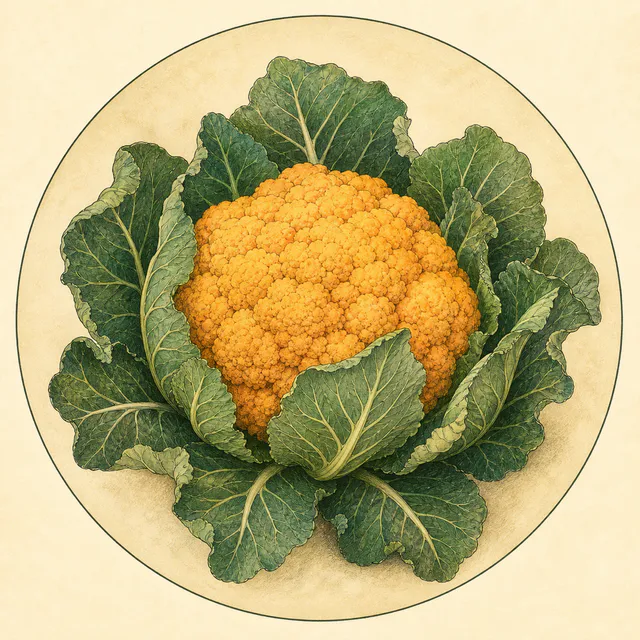
‘Sunset’ is a compact cauliflower forming distinctive golden-yellow to bright-orange curds wrapped in deep-green leaves. Sow it in spring for harvests in late summer and early autumn. Small baby heads can be picked for a colourful addition to salads.
Size
- Ultimate height
- 0.5–1 metre
- Ultimate spread
- 0.5–1 metre
- Time to ultimate size
- 1 year
Despite being described as compact, mature plants need adequate room for their broad, bushy foliage.
Growing conditions
- Suitable soils
- Chalk, clay, loam and sand
- Moisture
- Moist but well-drained
- Soil pH
- Alkaline or neutral
Use deep, fertile, firm soil that is not too acidic, and keep water available throughout summer.
Position and hardiness
- Light
- Full sun
- Aspect
- South- or west-facing
- Exposure
- Exposed or sheltered
- Hardiness
- H3 — hardy in coastal and relatively mild UK locations
Full sun helps plants develop strongly and shows off the unusual warm-coloured curds.
Colour and seasonal interest
The golden-yellow to vivid-orange curd is the defining feature, contrasting sharply with deep-green outer leaves in late summer and early autumn.
Botanical details
- Family
- Brassicaceae
- Native to Great Britain and Ireland
- No
- Foliage
- Deciduous
- Habit
- Bushy
- Name status
- Accepted
- Breeder
- Michael John Day
How to grow
Cultivation
Sow seed outdoors into deep, fertile but firm soil that is not too acidic. Where space is limited, start seed in modules or trays and plant outdoors once seedlings have five or six leaves and are easy to handle. Watering throughout summer is especially important for steady curd development.
Propagation
Propagate by seed, sown outdoors or started indoors.
Pruning
No pruning is required.
Pests
Potential pests include flea beetle, cabbage caterpillars, pigeons, snails, cabbage root fly and mealy cabbage aphid. Damage is often less severe after plants establish.
Diseases
Plants may be susceptible to club root, brassica downy mildew and brassica white blister.