
Chinese Cabbage · Variety guide
Brassica rapa (Pekinensis Group) ‘Vitimo’
Chinese cabbage ‘Vitimo’
This Allotment Pro editorial draft summarises the cited RHS cultivar profile. Check the source and adjust cultivation decisions for local conditions.Read the original RHS source
Overview
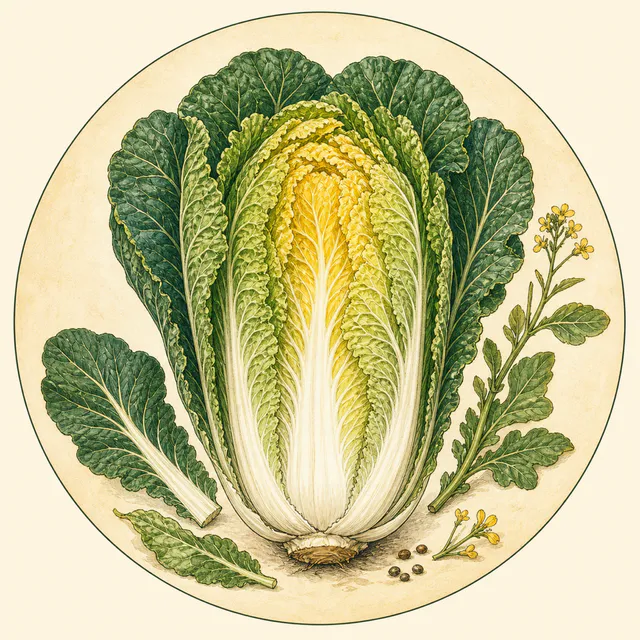
‘Vitimo’ is a compact, upright annual Chinese cabbage that forms tidy barrel-shaped heads. Each head combines attractive dark-green outer leaves with a contrasting yellow heart, giving the mature crop a distinctive two-tone appearance.
The compact columnar habit permits close planting in raised beds or containers. Heads are normally ready about 55 days after sowing, making ‘Vitimo’ a quick choice where space and cropping time both matter. The cultivar holds the RHS Award of Garden Merit.
Size
- Ultimate height
- 0.1–0.5 metre
- Ultimate spread
- 0.1–0.5 metre
- Time to ultimate size
- 1 year
Plants remain compact enough for patio containers, but need about 30cm between centres to develop full barrel heads. Their upright habit uses ground efficiently without sacrificing the dense yellow heart.
Growing conditions
- Suitable soils
- Clay and loam
- Moisture
- Moist but well-drained
- Soil pH
- Neutral or alkaline
Use fertile soil that retains reliable moisture but drains freely. Firm the ground before sowing or planting, and maintain steady water so the fast-growing leaves develop without a check that could affect head quality.
Position and hardiness
- Light
- Full sun
- Aspect
- South- or west-facing
- Exposure
- Sheltered
- Hardiness
- H3 — hardy in coastal and relatively mild UK locations at approximately −5 to 1°C
A warm, sheltered position supports the profile’s 55-day development. Although H3 indicates some cold tolerance, raise the annual crop during its active season rather than relying on exposed winter survival.
Colour and seasonal interest
| Season | Flowers | Foliage | Fruit |
|---|---|---|---|
| Summer | — | Green and white | — |
| Autumn | — | Green and white | — |
The profile’s seasonal colour field records green and white foliage, while the cultivar description adds the defining contrast of dark-green outer leaves surrounding a yellow inner heart.
Botanical details
- Family
- Brassicaceae
- Native to Great Britain and Ireland
- No
- Foliage
- Deciduous
- Habit
- Columnar upright
- Name status
- Accepted
How to grow
Cultivation
Grow in full sun in fertile, moist but well-drained soil. Sow indoors from May to July, or direct-sow into a well-prepared seedbed at 1cm deep with 30cm between rows. Thin direct seedlings to 30cm apart when large enough to handle.
For protected sowing, use trays of free-draining seed compost, cover seed lightly with vermiculite and germinate at 20–25°C. After germination, move seedlings into cooler conditions. Transplant when they carry two or three true leaves, then harden off for seven to ten days before planting in their final positions.
Propagation
Propagate by seed.
Suggested locations
- Patio and container plants
- Raised vegetable beds
Pruning
No pruning is required. Remove only damaged foliage and cut the complete head at harvest.
Pests
May be susceptible to birds, flea beetle, cabbage caterpillars, cabbage whitefly, cutworms, slugs and snails, mealy cabbage aphid and cabbage root fly. Protect young plants early and inspect the tightly packed leaves.
Diseases
May be susceptible to club root, downy mildew, black rot, leaf spot and grey mould. Rotate brassicas, maintain airflow and avoid leaving the yellow heart persistently wet.