
Chinese Cabbage · Variety guide
Brassica rapa (Pekinensis Group) ‘Natsuki’
Chinese cabbage ‘Natsuki’
This Allotment Pro editorial draft summarises the cited RHS cultivar profile. Check the source and adjust cultivation decisions for local conditions.Read the original RHS source
Overview
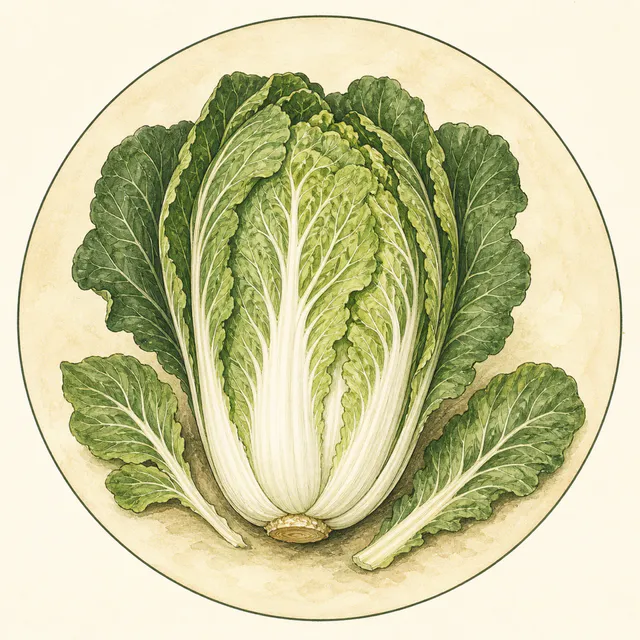
‘Natsuki’ is a smooth-leaved, multipurpose Chinese cabbage with crisp green leaves and thick white veins. It combines resistance to tip burn with resistance to bolting, making it a useful choice where growers want both reliable heads and tender leaves.
The cultivar grows quickly, maturing about seven weeks after sowing in May or June. Its compact tufted habit and broad soil tolerance suit productive beds, including exposed and coastal sites when the ground remains fertile and evenly moist.
Size
- Ultimate height
- 0.1–0.5 metre
- Ultimate spread
- 0.1–0.5 metre
- Time to ultimate size
- 1 year
Allow enough room for the green outer leaves and white-ribbed centre to expand into a usable head. The plant remains within the compact size range typical of quick Chinese cabbages.
Growing conditions
- Suitable soils
- Chalk, clay, loam and sand
- Moisture
- Moist but well-drained
- Soil pH
- Acid, neutral or alkaline
Prepare firm, fertile ground that holds moisture without becoming waterlogged. Consistent water supports its rapid seven-week development and complements the cultivar’s natural resistance to bolting and tip burn.
Position and hardiness
- Light
- Full sun
- Aspect
- East-, north-, south- or west-facing
- Exposure
- Exposed or sheltered
- Hardiness
- H5 — hardy in most UK locations, including severe winters at approximately −15 to −10°C
The broad aspect and exposure range makes ‘Natsuki’ adaptable, including for coastal cultivation. Full sun and fertile soil are still needed for strong, compact leaf growth.
Colour and seasonal interest
| Season | Flowers | Foliage | Fruit |
|---|---|---|---|
| Spring | — | Green and white | — |
| Summer | — | Green and white | — |
| Autumn | — | Green and white | — |
The visual character comes from smooth fresh-green blades divided by broad, crisp white veins. Harvest before unwanted flowering so the leaf head remains the focus.
Botanical details
- Family
- Brassicaceae
- Native to Great Britain and Ireland
- No
- Foliage
- Evergreen
- Habit
- Tufted
- Name status
- Accepted
How to grow
Cultivation
Grow in full sun in firm, fertile soil. The cultivar is also suitable for coastal regions. Sow in May or June when aiming for the profile’s seven-week maturity period, and prevent checks to growth by maintaining moisture and protecting young plants from pests.
Harvest as a multipurpose crop: take sound young leaves as needed or allow the smooth green and white-ribbed foliage to form a compact head. Its bolting resistance is useful but does not remove the need for steady watering in hot weather.
Propagation
Propagate by seed.
Pruning
No pruning is required. Remove only damaged leaves and harvest the edible head or outer foliage.
Pests
May be susceptible to flea beetle while young, small white butterfly caterpillars, cabbage root fly, mealy cabbage aphid and pigeons. Use fine mesh early and inspect the leaves and central growth regularly.
Diseases
May be susceptible to brassica downy mildew and brassica white blister. Club root can build up where brassicas have previously grown, so rotate crops and avoid transferring contaminated soil.