
Cucumbers · Variety guide
Cucumis sativus ‘Delistar’
Cucumber ‘Delistar’
This Allotment Pro editorial draft summarises the cited RHS cultivar profile. Check the source and adjust cultivation decisions for local conditions.Read the original RHS source
Overview
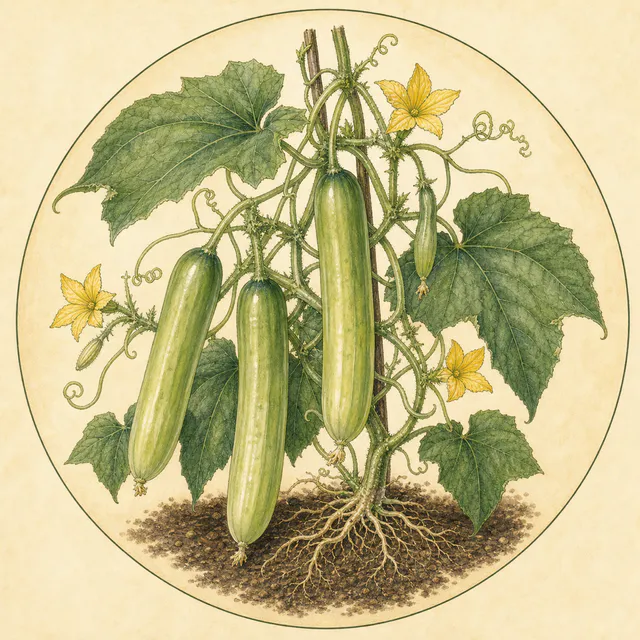
‘Delistar’ is a trailing or climbing cucumber usually grown as an annual and particularly suited to indoor pots and containers. Its yellow flowers are followed by aromatic, sweet and crunchy fruits around 16–18cm long. Their skin is notably thin and translucent, so the cucumbers can be eaten without peeling.
This combination of medium-small size, delicate skin and distinctive flavour separates ‘Delistar’ from thick-skinned outdoor ridge cucumbers. The cultivar holds the RHS Award of Garden Merit.
Size
- Ultimate height
- 1.5–2.5 metres
- Ultimate spread
- 0.5–1 metre
- Time to ultimate size
- 1 year
Train the vigorous stems vertically on a secure support. The plant needs more height than many short ridge cultivars, while regular training and picking keep its spread manageable in a greenhouse or conservatory.
Growing conditions
- Suitable soils
- Chalk, clay, loam and sand
- Moisture
- Moist but well-drained
- Soil pH
- Acid, neutral or alkaline
‘Delistar’ accepts a broad soil range but needs rich ground with plenty of organic matter, or good-quality container compost. Keep roots regularly watered without waterlogging.
Position and hardiness
- Light
- Full sun
- Aspect
- South- or west-facing
- Exposure
- Sheltered
- Hardiness
- H2 — tolerant of cool conditions around 1–5°C but unable to survive freezing
Indoor pots and containers are the intended setting. Plants may move to an unheated greenhouse or a warm sheltered outdoor site after frost, but they remain tender and need protection from freezing.
Colour and seasonal interest
Green climbing foliage and yellow flowers frame medium-small green cucumbers. Mature fruits are about 16–18cm long, with a fine, thin, slightly translucent skin rather than the heavier surface of a ridge type. This delicate edible skin is the most useful visual cultivar cue.
Botanical details
- Family
- Cucurbitaceae
- Native to Great Britain and Ireland
- No
- Foliage
- Deciduous
- Habit
- Trailing and climbing
- Name status
- Accepted
How to grow
Cultivation
Start plants in a heated greenhouse or in pots on a sunny windowsill. Move them to an unheated greenhouse or outdoors only after all danger of frost has passed. Plant into rich soil containing plenty of organic matter, or use a large container of good compost.
Water regularly and apply liquid feed every 10–14 days. Train stems up supports to improve airflow and keep the thin-skinned fruits clean. Harvest regularly at 16–18cm to preserve their aromatic flavour, sweetness, crunch and delicate peel-free skin.
Propagation
Propagate by seed.
Suggested locations
- Indoor pots and containers
- Conservatory and greenhouse
- Warm sheltered patio after frost
Pruning
Pinch out the main tip when it reaches the top of its support to encourage branching. Pick fruits regularly to stimulate further production, removing only excess or unproductive growth where it restricts airflow.
Pests
May be susceptible to glasshouse whitefly and glasshouse red spider mite under glass, or slugs and snails outdoors. Inspect leaves and keep low fruits clear of damp ground.
Diseases
May be susceptible to cucumber mosaic virus and powdery mildew. Maintain hygiene, airflow and steady moisture, and remove plants showing serious virus symptoms.