
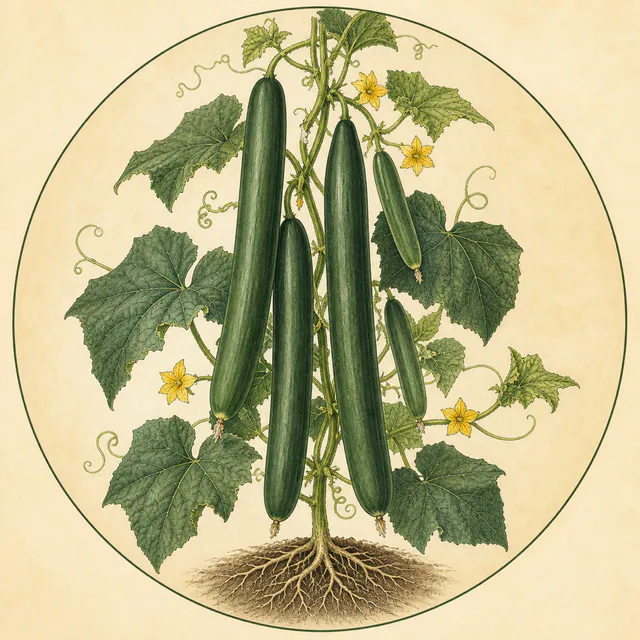
‘Carmen’ AGM
A greenhouse cultivar producing a large crop of long, straight, crunchy fruits with useful disease resistance.
The crop growing guide
This Allotment Pro editorial draft summarises the cited RHS guide. Check the source and adjust timings for local conditions.Read the original RHS source
Your season at a glance
Indoors
Heated greenhouse — Start seed in warmth for plants that will remain in a heated greenhouse.
Indoors
Unheated protection — Sow for an unheated greenhouse, polytunnel or large coldframe.
Indoors
Outdoor crop — Start outdoor cultivars in pots so they are ready after frost.
Outdoors
Direct sow — Sow outdoor cultivars in their final positions only after the soil has warmed in a mild location.
Heated greenhouse — Plant early only where greenhouse heat can be maintained.
Unheated greenhouse — Plant once the protected growing space remains above 12°C (53°F).
Outdoors — Harden plants carefully and wait until local temperatures remain above 12°C (53°F).
Greenhouse crops usually run from mid-summer to mid-autumn; outdoor cropping starts later and ends earlier according to the weather.
Cucumbers are tender climbing or scrambling plants that reward steady warmth and moisture with crisp summer fruits. They can be grown in a greenhouse, polytunnel or warm sheltered outdoor position. Training the stems vertically keeps fruits clean, saves ground space and makes cucumbers practical in compact gardens, patio containers and small greenhouses.
Cucumis sativus belongs to the same cucurbit family as courgettes, squashes and pumpkins. Plants may also trail over the ground, but vertical support reduces contact with damp soil and limits slug damage. Under glass, the season can continue from mid-summer into early autumn; outdoors, success depends more heavily on warm weather.
Cucumber cultivars differ in fruit length, flavour, skin texture and resistance to disease. Mini types produce numerous short fruits that mature quickly, full-sized types make longer slicing cucumbers, and very small gherkin types are intended for pickling.
A greenhouse cultivar producing a large crop of long, straight, crunchy fruits with useful disease resistance.
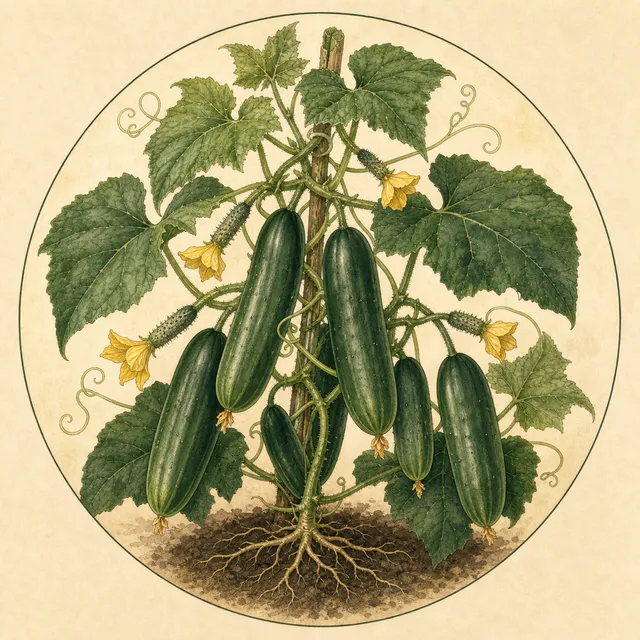
A productive greenhouse cucumber giving plentiful medium-length, smooth-skinned fruits with good flavour.
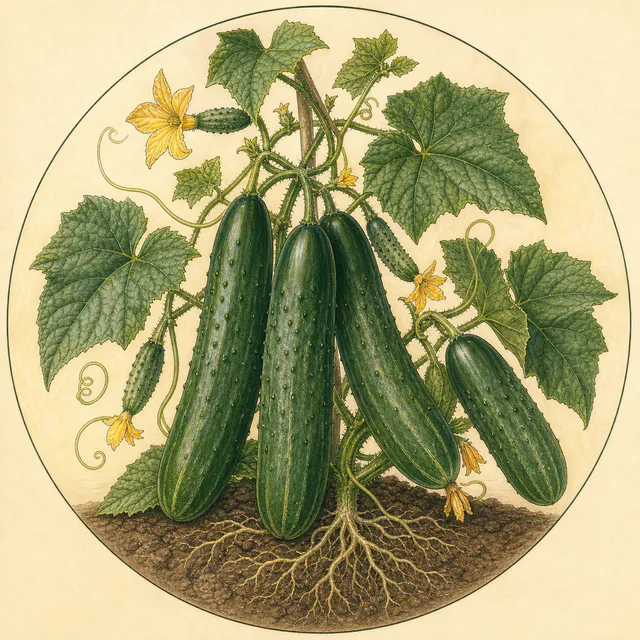
A reliable predominantly female cultivar for an unheated greenhouse or warm outdoor site, producing large, tasty dark-green fruits.
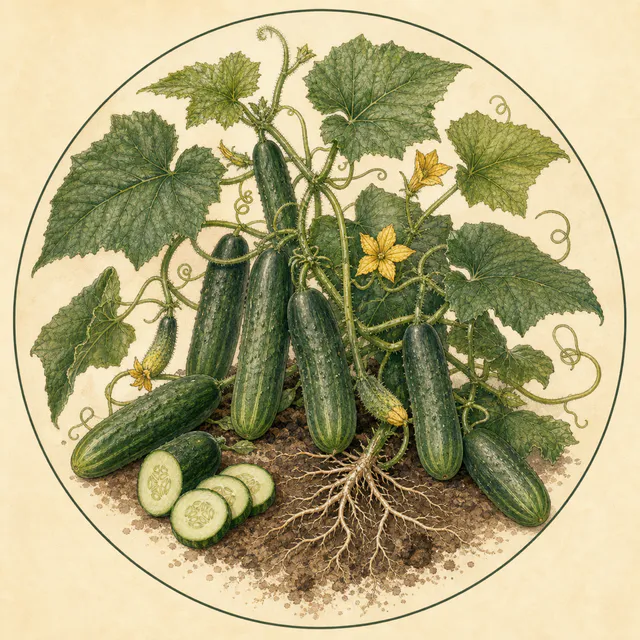
A heavy-cropping outdoor ridge cucumber with medium-sized cylindrical dark-green fruits and good flavour.
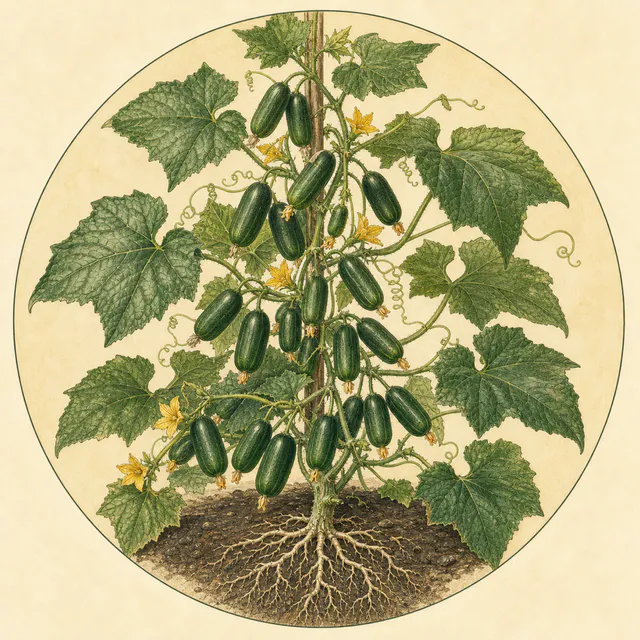
A greenhouse mini cucumber with smooth-skinned fruits and a heavy crop over a long season.
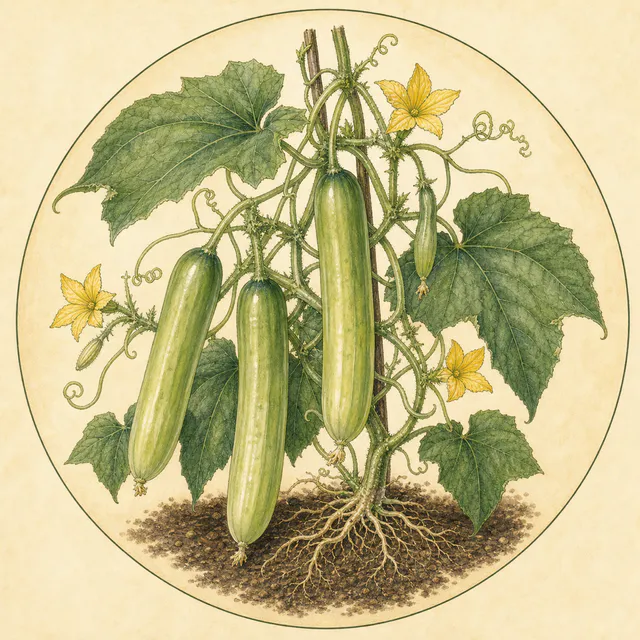
A greenhouse cultivar bearing aromatic, sweet and crunchy medium-sized fruits with thin translucent skin that needs no peeling. ## 3 - Preparing The Ground Choose a greenhouse or polytunnel border, or a sunny outdoor position protected from cold wind. Cucumbers need fertile, moisture-retentive ground that still drains freely.
Indoor cultivars suit greenhouses, polytunnels and large coldframes and generally crop for longer. Most modern greenhouse cultivars are all-female and must not be pollinated, because pollination can make their fruits bitter. Outdoor or ridge cucumbers tolerate open-air conditions in a warm sheltered site; they carry both male and female flowers, and the male flowers must remain so insects can pollinate the crop.
Seeds provide the widest range. Young or plug plants sold in spring and early summer are convenient where only one or two plants are needed, although small plugs require potting on and protection before planting. Grafted plants cost more and offer fewer cultivar choices, but their vigour can produce a larger, longer crop and their resistance to soil-borne disease is helpful where the same greenhouse border is used repeatedly.
Choose a greenhouse or polytunnel border, or a sunny outdoor position protected from cold wind. Cucumbers need fertile, moisture-retentive ground that still drains freely.
A few weeks before planting, dig two bucketfuls of home-made garden compost or well-rotted manure into each site and let the ground settle. For no-dig cultivation, mulch the surface beforehand and plant through the organic layer. Set growing sites 30cm (1ft) apart.
Use a pot at least 30cm (1ft) wide and 30cm (1ft) deep, filled with peat-free multipurpose compost. This minimum volume helps buffer moisture changes, although container plants still need close attention in hot weather.
Indoor sowing gives the most reliable germination, protects young plants from poor weather and molluscs, and brings cropping forward. Move strong seedlings to their final site after roughly a month. Direct sow only outdoor cultivars in sufficiently mild conditions.
Match sowing time to the final growing place: mid-February to mid-March for a heated greenhouse, April for an unheated greenhouse, polytunnel or large coldframe, and late April for outdoor planting.
Fill 10cm (4in) pots with moist peat-free seed compost. Place one seed on its side in the centre of each pot, 1–2cm (½–¾in) deep. Keep at 21°C (70°F) in a heated propagator, or cover the pot with a clear plastic bag on a warm sunny windowsill. Germination normally takes one or two weeks. Remove the cover when seedlings appear, then keep plants warm, brightly lit and regularly watered.
In late May or early June, sow up to three seeds together at each prepared outdoor site, 1–2cm (½–¾in) deep. Thin multiple seedlings to the single strongest plant. Cover with cloches or plastic-free fleece to warm the soil, retaining protection after germination while plants establish. Guard young growth from slugs and snails, particularly in damp weather.
Water plants before transplanting and preserve the rootball to avoid a check in growth. Greenhouse plants can go into a heated structure from late March, or into an unheated structure from late May once it stays above 12°C (53°F). Harden outdoor plants carefully, then plant from early June when local temperatures reliably exceed the same threshold.
Put one plant in the centre of a pot at least 30cm (1ft) wide and deep. Firm gently, water thoroughly and install support immediately. A standard growing bag can hold two cucumber plants.
Place one cucumber in the middle of each enriched site, spacing plants 30cm (1ft) apart. Firm and water without burying the stem, then add supports if the plant will grow vertically.
Install supports at planting so tendrils can attach as growth begins. Tie the stem loosely at first and continue guiding it if it comes free, especially outdoors or when carrying heavy fruit.
In a greenhouse, use a sturdy cane reaching the roof or a vertical wire or string anchored at ground level; side-shoots may also need horizontal support. Outdoors, make a cane wigwam or support stout netting between stakes. A wall or fence fitted with trellis or wires also works. For plants trailing on soil, lay plastic-free weed-suppressing membrane after planting to keep fruits clean and reduce rotting.
Warmth, evenly moist roots and controlled growth are the foundations of a good crop. Container plants also require regular liquid feeding, while greenhouse temperature and humidity need active management.
Keep greenhouse and container compost evenly moist, particularly when fruits form; during hot spells this may mean daily watering. Mulched outdoor plants need less frequent attention but still require water in dry weather. Water at the plant’s base in the cool morning if possible, using rainwater and keeping foliage dry to discourage powdery mildew.
Sink an empty plant pot beside an outdoor cucumber and water into it to direct moisture towards the roots rather than leaving the stem neck wet and vulnerable to rotting.
Apply a thick layer of garden compost or well-rotted manure around plants to retain water and suppress weeds, leaving a clear gap at the stem. Ground-grown plants in fertile soil normally need no extra feed. Give container plants a general liquid fertiliser every 10–14 days, changing to a high-potassium feed once flowering begins to promote fruiting.
For greenhouse plants, remove the main growing point on reaching the roof. Shorten a fruiting side-shoot two leaves beyond its female flower, and pinch a flowerless side-shoot when it reaches 60cm (2ft). For outdoor plants, pinch the main tip once seven leaves have formed to promote side-shoots, then shorten non-flowering side-shoots after seven leaves.
Do not allow all-female greenhouse cultivars to be pollinated. Check the seed packet, and remove any occasional male flower, identifiable because it lacks the tiny immature fruit behind its petals. Outdoor ridge cultivars need pollination, so retain their male flowers.
In hot weather, damp down the concrete floor or central path with a full watering can. Evaporation raises humidity, supports even fruit development and makes conditions less favourable to red spider mites and powdery mildew. Shade and ventilate to keep summer greenhouse temperatures ideally between 18 and 25°C (64–77°F).
Greenhouse cucumbers usually ripen from mid-summer to mid-autumn, while outdoor plants have a shorter weather-dependent season. Pick just before use for maximum crunch, and harvest regularly so the plant continues setting fruits.
Use fruit type as the size guide: cut mini cucumbers at about 8cm (3in), small-fruited cultivars at about 15cm (6in), and full-sized cucumbers at 20–25cm (8–10in). A ready fruit is firm and evenly green, usually with a slightly rounded tip. Cut its stem cleanly with a knife or secateurs instead of pulling. Check plants every few days because fruits enlarge quickly; yellowish, bulbous or soft cucumbers are overripe.
Good airflow, consistent root moisture, dry foliage and suitable greenhouse humidity help prevent many cucumber problems. Powdery mildew and glasshouse red spider mite become troublesome in dry greenhouse air. Cucumber mosaic virus is more serious and affected plants should be removed and destroyed.
CMV causes yellow mottling, distorted foliage and stunted growth. There is no cure, so remove affected plants promptly and avoid spreading sap between plants.
Problem sourceThese tiny sap-feeding mites thrive in hot, dry protected conditions, causing pale mottling and premature leaf loss. Maintain appropriate humidity and inspect leaf undersides.
Problem sourceWhitefly feed on greenhouse plants and excrete sticky honeydew, which can support sooty mould. Check young growth and leaf undersides for adults and scales.
Problem sourcePowdery mildews coat leaves and stems with white dusty fungal growth and can weaken plants. Avoid drought stress and wet foliage, keep air moving, and choose a resistant cultivar where this is recurrent.
Problem sourceSlugs and snails are most damaging to seedlings, young plants and fruits touching damp ground. Protect direct sowings and use vertical supports to lift cucumbers away from the soil. Source: Royal Horticultural Society. Structured as an Allotment Pro editorial draft for review; source facts and links remain attributable to the publisher.
Problem source